


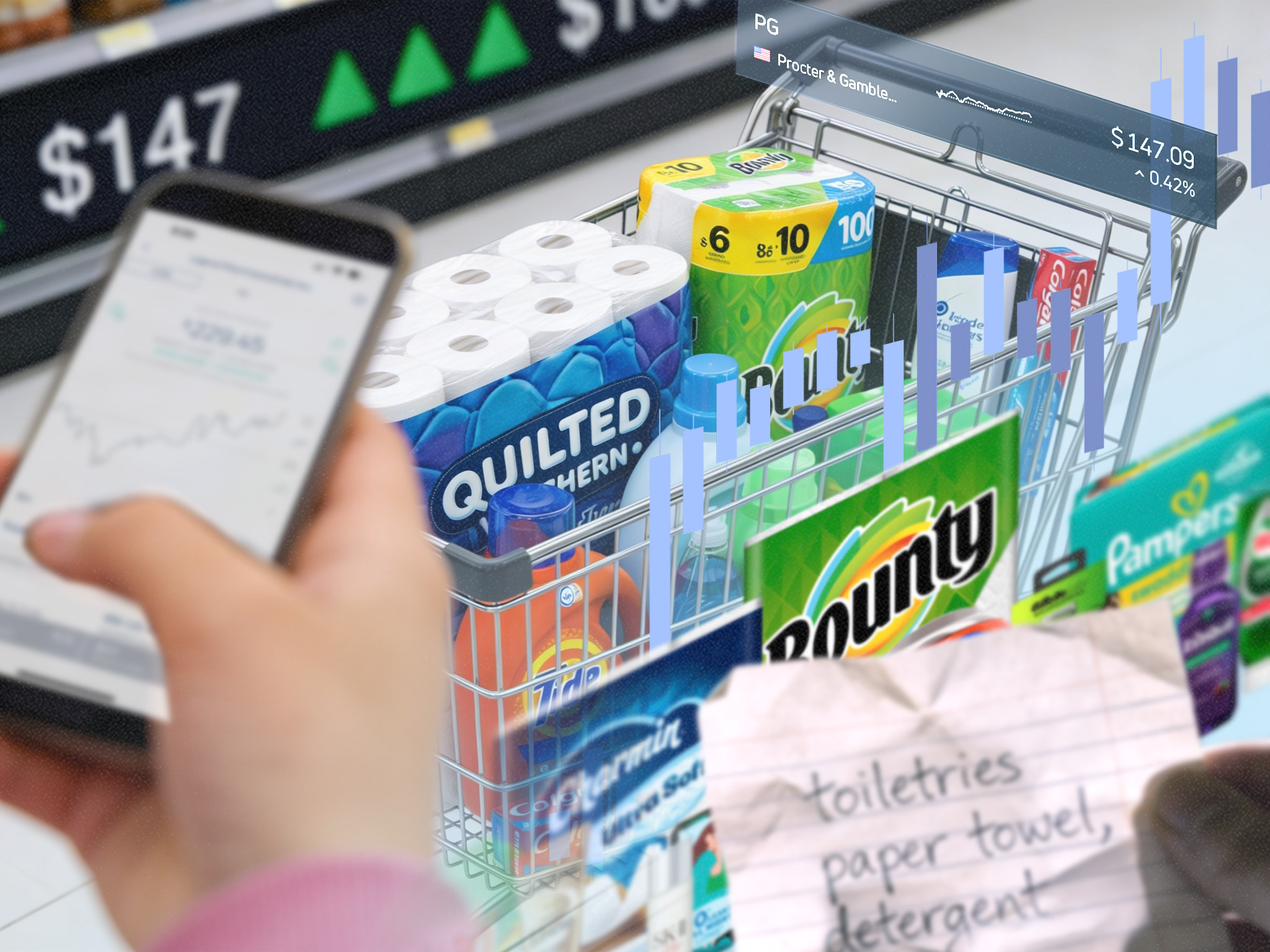


Consumers have been resilient despite facing some higher costs, spending money on Charmin toilet paper, Tide laundry detergent, and Bounty paper towels manufactured by Procter & Gamble (NYSE: PG), boosting its volume for the first time in 12 months.
The household goods company reported net sales of $21.2 billion during its fiscal third quarter that ended on March 31, a growth of 7% compared to the previous year. Wall Street analysts had estimated revenue of $20.5 billion.
Shoppers are spending more money on consumer packaged goods. Procter & Gamble reported all 10 of its personal care product categories, ranging from hair care products such as its Pantene shampoos and conditioners to grooming items such as its Gillette razor blades, grew by 3% organically compared to the prior year.
“I would say, right now, the consumer in the U.S. is stable,” said Procter & Gamble CFO Andre Schulten. “We see the bifurcation of the consumer segments continuing.”
Procter & Gamble’s revenue boost includes a 2% benefit from volumes and a 1% increase in prices.
“We remain willing to manage some short-term pressure on the bottom-line to come out of this period with stronger brands and business momentum on the other side,” he said during a conference call.
But Procter & Gamble did not change its guidance for fiscal 2026 since the war against Iran could put pressure on commodity costs in 2026 and lower profits by $150 million after tax for the year. The company reiterated revenue growth between 1% and 5% and net earnings per share growth in the range of 1% to 6%.
The company said it would not provide an estimate for fiscal 2027 until its next quarterly earnings report in July.
Investors have seen the stock rise by 6.1% year-to-date as the company reported earnings of $1.59 a share, an increase from $1.54 a year ago, beating Wall Street analysts’ estimate of $1.56.
The “focus should remain on the organic sales beat, which we expect to support a positive stock reaction,” said Peter Galbo, a BofA Securities analyst, in a research note. He reiterated a buy rating with a price target of $167 a share.
Shoppers spent the most money on products in Procter & Gamble’s beauty division, which includes Pantene, Olay, and Head & Shoulders, as volume grew by 5%.
The baby, feminine, and family care segment reported volume rose by 3% due to higher sales for Bounty, Charmin, and its diaper brands, Pampers and Luvs. Procter & Gamble’s fabric and home care division reported volume grew by 2%, as more Tide was sold.
Volume fell by 2% each in its grooming segment, which includes Gillette and Venus products, and health care, which sells Oral-B and Vicks.
The manufacturer of Dawn, a dishwashing liquid, and Febreze, an odor eliminator used on fabrics, generates significant cash as its free cash flow exceeded $17 billion in fiscal 2025, which is about 20% of sales.
Investing in research and development, marketing
The company is estimated to spend over 13% of sales or about $13 billion to be directed to research, development, and marketing, and 4.3% or $4 billion on capital expenditures, as “P&G works to scale capabilities across its network to solidify its leading edge,” wrote Erin Lash, a sector director of consumer equity research for Morningstar.
Procter & Gamble is forecast to generate 4% revenue growth annually over the long term, she added. The company’s efforts to improve its products have resonated with consumers, such as upgrading its Tide Boost formula for the first time in 25 years, which helped the company achieve mid-teens sales growth.
“P&G’s efforts to filter product enhancements across its price tiers as a prudent mechanism to stymie competition, particularly from private-label fare,” wrote Lash.
Cost-cutting measures benefiting margins
The company has been cutting costs and the number of products it manufactures and sells for over a decade. Last year, Procter & Gamble laid off 15% of its non-manufacturing workforce, or 7,000 employees, its first massive reduction in 13 years.
From 2012 to 2016, the company slashed 34,000 jobs or 26% of its workforce via layoffs, buyouts, attrition, and sold 100 brands, completing two $10 billion cost-reduction efforts.
During the past decade, the company shifted its focus to consumer staples, shedding cosmetic brands such as CoverGirl and Max Factor, fragrances, pet foods, and batteries.
“We believe P&G’s strategic aims—investing in product innovation and marketing to support its portfolio of daily-use, essential offerings—should help its brands maintain their clout with retailers and consumers, reinforcing its wide moat over the long term,” she added.
Consumers remain ardent fans of Procter & Gamble’s higher-priced everyday products that have a competitive edge over its rivals.


Comments