


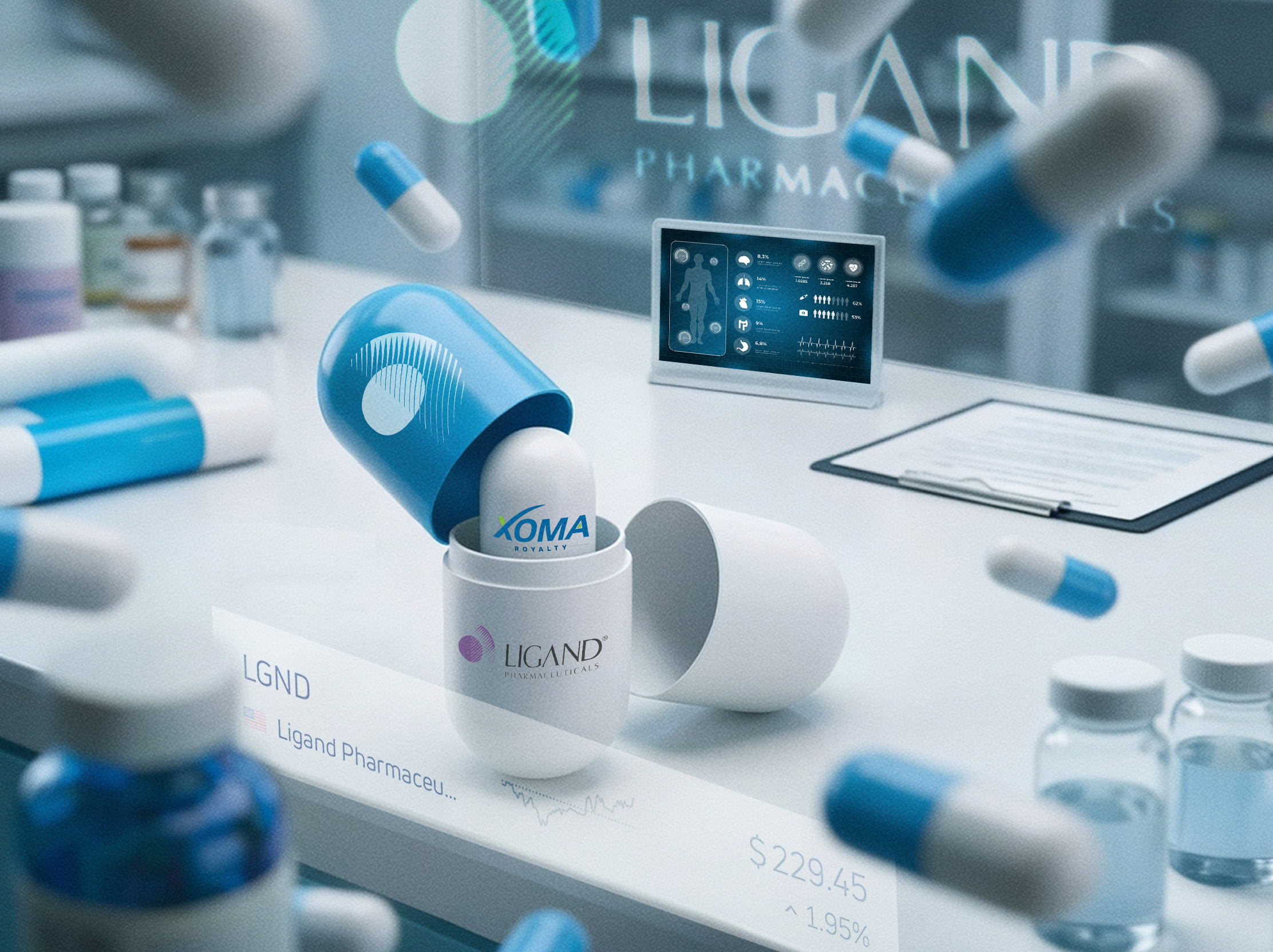


Ligand Pharmaceuticals (NASDAQ: LGND) has nearly doubled the size of its drug and experimental treatment portfolio with its latest acquisition.
The Jupiter, Florida, company will acquire Xoma Royalty for $739 million.
The deal gives Ligand, a $4.6 billion market-cap company, the ability to earn profits from over 120 drugs owned by Xoma, a company that invests in various biotech firms.
Ligand, which currently owns the commercial rights to drugs such as Filspari, a treatment for kidney diseases, and Capvaxive, a vaccine treatment for pneumococcal that is manufactured by Merck (NYSE: MRK), will now own over 200 drugs, including ones that are currently treating patients and other ones that are in late-stage phases of clinical trials.
The deal will add seven marketed products and “nearly double our portfolio of Phase 2 and 3 assets, which we believe will create significant value for our stockholders, all through a single transaction,” said Todd Davis, CEO of Ligand.
Ligand increased its revenue forecast to between $270 million and $310 million for 2026, compared to its previous range of $245 million to $285 million. Royalties are estimated to rise to $225 million to $250 million, compared to a prior estimate of $200 million to $225 million.
Shares of the company shot up by 106% during the past year. Eight Wall Street analysts rate the stock with a buy rating.
Biotech firms that are in the development stage and close to being approved by federal regulators to reach the commercialization stage are often targets for larger pharmaceutical companies that have the cash flow to bring a drug to the market.
Some smaller biopharmaceutical companies will sell the royalty rights and milestones to companies like Xoma or Ligand, which believe these businesses will generate revenue in the future.
Both companies are royalty aggregators, which are companies that invest capital in the development of drugs while they are in Phase 2 or Phase 3 of trials. If the drugs are approved by the Federal Drug Administration, the royalties from their sales, which range from single digits to double digits, are collected by Ligand.
“We have a rapidly growing portfolio of royalties as well as a significant iceberg below the surface in development-stage products,” he said.
Xoma’s prior acquisition strategy
Xoma, an Emeryville, California company, was an attractive target because the company has been acquisitive, accumulating stakes in seven approved drugs, such as Ojemda, a drug to treat brain cancer manufactured by Day One Biopharmaceuticals, Vabysmo, an eye treatment made by Roche Holding, and Miplyffa, a rare disease treatment manufactured by Zevra Therapeutics.
The portfolio owned by Xoma also includes 14 drugs that are in late-stage development, including Takeda Pharmaceutical’s (NYSE: TAK) antibody mezagitamab and other candidates.
In 2025, Xoma purchased several biotechs, including ones that were running out of capital, including Generation Bio, Lava Therapeutics, Mural Oncology, and HilleVax, a spinout from Takeda.
Buying Xoma occurred because the company is “approaching an inflection point financially” and will add “substantial additional product growth” into the next decade, Ligand CEO Todd Davis told Fierce Pharma.
“We can absorb the [Xoma] portfolio with almost 100% synergies,” he said. “We’ll probably bring a couple to a few employees over, and there’s some lease obligations, but there’s no commercial infrastructure required, there’s no manufacturing infrastructure, there’s no clinical development infrastructure. So this is a highly efficient business model in general, and the [operating expense] essentially tied to the Xoma portfolio now largely goes away through that synergy realization.”
The company’s strategy is to focus on acquiring private and late-stage companies valued from small caps to mid caps with deal sizes that run from $25 million to $60 million, said Davis, according to the article.
The royalty industry has the potential for “over $12 billion … in royalty capital that’s out there and available, but the very significant majority of that capital is still focused on commercial-stage deals,” he added.
Ligand’s acquisition strategy of buying smaller, promising biotechs will likely fuel more growth in the future.

Comments