


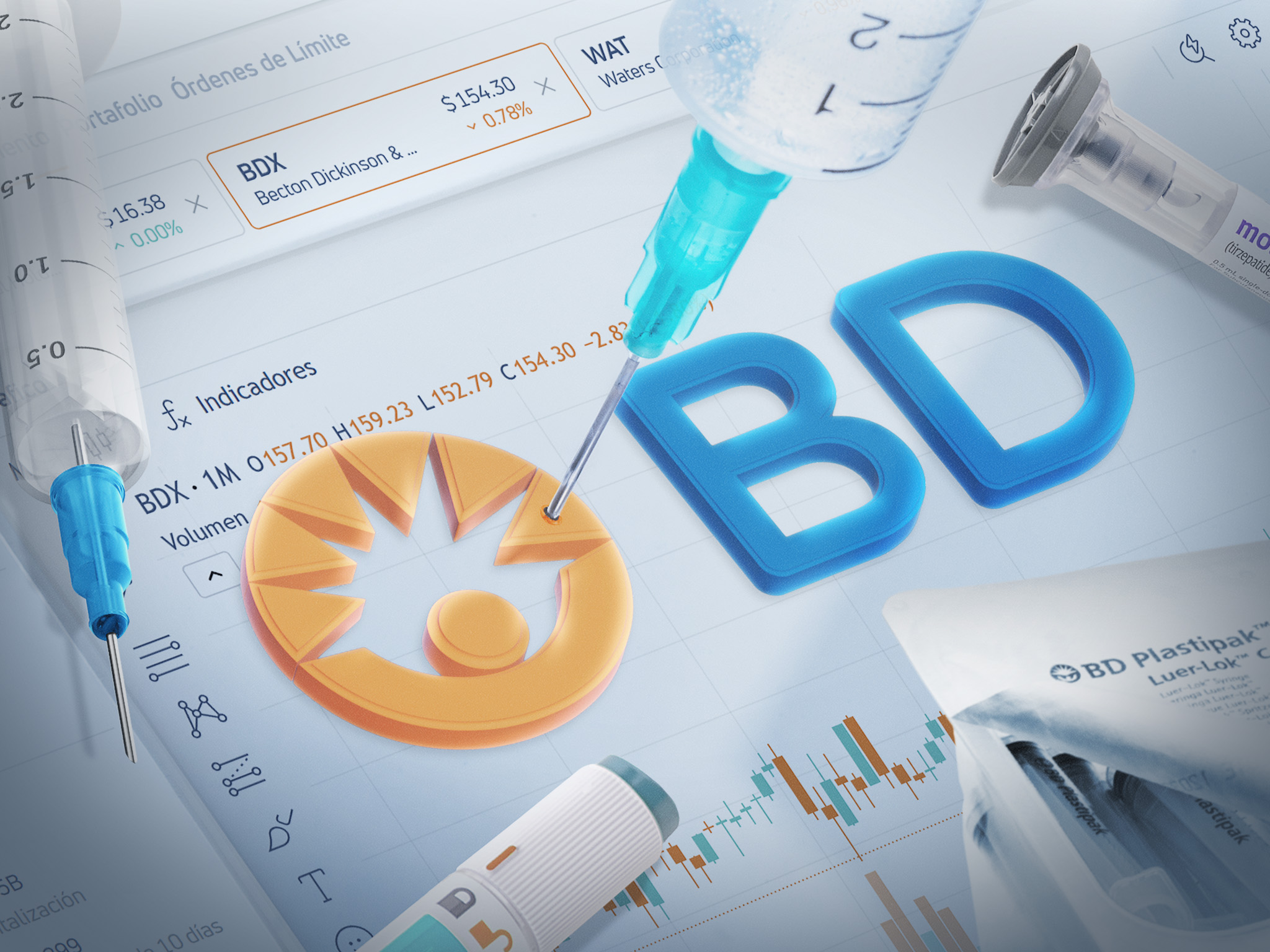


Becton Dickinson (NYSE: BDX), the world’s largest manufacturer of surgical products, such as needles and syringes, has sucked wind in recent years, thanks largely to its own mistakes.
The company faced safety recalls for its Alaris modular infusion pump that represented 10% of its profit. There have been legal and financial settlements for misdeeds, including deceiving its investors by downplaying software flaws and overstating its earnings. It was hit by 38,000 lawsuits for injuries caused by its hernia mesh products.
Not all of Becton’s wounds have been self-inflicted. It has suffered from U.S. tariffs and Chinese government requirements for price cuts on medical consumables. The reduction in vaccine usage after the Covid pandemic petered out also hurt the company.
Put it all together and Becton has a sad story to tell. “BD’s recent history is nothing but a series of major missteps, resulting in the company’s stock being one of the medical technology industry’s worst performers over the last five years,” wrote Morningstar analyst Alex Morozov.
Becton shares generated an annualized total return of negative 3.1% for the past five years, far behind the S&P 500’s positive 12.2% return. Over the past year, Becton return is minus 2.5%.
‘Biggest Blemish’
“The biggest blemish on BD’s reputation was the disastrous recall of Alaris, but even beyond that, the company’s performance has been poor,” Morozov said. “Concerns about management’s strategic vision and execution are well-founded and have not abated following the announcement of the spinoff of the life sciences business.”
In February, Becton spun off its biosciences and diagnostic solutions division to Waters Corp. (NYSE: WAT). Becton’s shareholders received a stake of Waters, and BD itself garnered $4 billion in cash. The deal valued its life sciences business at $18.8 billion. BD plans to use $2 billion of the proceeds to repurchase its stock and the other $2 billion for debt repayment.
“We find the strategic rationale for the spinoff reasonable,” Morozov said. “The diagnostic and biosciences businesses have little overlap with the remainder of BD…. The spinoff represents BD’s continued pursuit of portfolio optimization.”
He and others see hopeful signs for Becton in the long term. “Alaris has returned to the market and recaptured most of its lost share,” he said. “The pipeline has produced a number of successful products, the pharmaceutical business is capitalizing on attractive industry tailwinds, and the recently acquired Edwards patient monitoring business fits well with the core offering.”
Productive products
Successful products include pre-fillable syringes and pen-injectors for GLP-1 anti-obesity and diabetes drugs. There’s also a portable urine management system, and an irrigation platform for surgery. Becton bought Edwards Lifesciences’ critical care division for $4.2 billion in 2024.
David Giroux, chief investment officer of T. Rowe Price Investment Management, also sees a recovery coming. The Alaris woes and Covid are a thing of the past, he told Barron’s. The China pricing headwind will end this year, as China’s portion of Becton’s revenue will drop to less than 4% next year from a peak of 8%.
Vaccine sales have dropped so far — to 2% of total sales in 2026 and 2027 – that there’s more room for them to rise now than fall, Giroux said. And Becton is coping well with U.S. trade sanctions. Free cash flow conversion should rise to more than 90% in 2027, up from 66% in the quarter ended Dec. 31 he said. FCF conversion is free cash flow divided by net income or EBITDA.
So while Becton is suffering pain now, that might turn into gain later.


Comments