




You (or your parents, depending on your age) probably remember 175-year-old Reuters as a fierce global force in the news and financial information business.
Those days are long gone, with Reuters news now contributing only 10% of Thomson Reuters’ (NASDAQ: TRI) revenue. In 2008, Canada-based Thomson, a business publisher, bought the U.K.-based news icon for $17 billion. It dumped Reuters’ financial data segment, leaving just the news agency.
Reuters isn’t just small, it also has little competitive advantage, says Morningstar analyst Rob Hales. “While Reuters has brand recognition, the news and editorial space is mostly commoditized,” he wrote in a commentary. “We don’t think Reuters has been able to monetize its brand recognition enough to be considered an intangible asset.”
But he likes Thomson Reuters as a whole. It’s a leading worldwide provider of business information services, delivering crucial data, technology, and expertise to professionals in the legal, tax, accounting, risk and compliance industries. The U.S. accounts for 85% of TRI’s revenue.
Hales offers a succinct explanation of what Thomson Reuters provides its customers. The company’s content-driven technology helps them in three main areas, he said.
Vital services
That includes “finding answers to complex industry-specific questions; creating work products such as legal documents, tax returns, and compliance reports; and managing risk, such as deciding whether to accept a new customer or use a certain vendor.”
Thomson has stellar global market-share in its main segments. It’s No. 1 in legal information, No. 2 in professional tax and accounting and No. 1 in corporate legal and tax solutions.
If you’re a lawyer, you’re probably familiar with TRI’s biggest product Westlaw, which generates 25% of the company’s revenue. “It is the premier legal research tool in the U.S.,” Hales said. Lawyers use it to find precedents, analyze case law, and interpret statutes and regulations. Its data go back 150 years, and the company’s 1,600 attorney-editors keep it up to date.
Thomson Reuters benefits from the fact that its products are very important for their customers’ jobs on a daily basis. “The costs of failure can be high in legal and tax matters,” Hales noted. “Consequently, customers are very hesitant to switch from a trusted provider like Thomson.”
Thomson clients grow attached to the products after investing time to use them. Changing vendors could result in data losses for customers. And these products are generally inexpensive, deterring customers from considering Thomson competitors, Hales explained.
Corporate purchases
Thomson has strengthened itself through small acquisitions over the past few years. In 2023, it bought SurePrep, a tax software service, for $500 million. Also that year it purchased Casetext, a legal technology platform including AI, for $650 million. More bolt-on acquisitions are likely in the years ahead, Hales maintains.
The company’s revenue grew 3% last year, and it expects that growth to accelerate to 7.5-8% this year. It anticipates an adjusted EBITDA profit margin of 40.2% in 2026, up 100 basis points from last year. EBITDA is earnings before interest, taxes, depreciation and amortization.
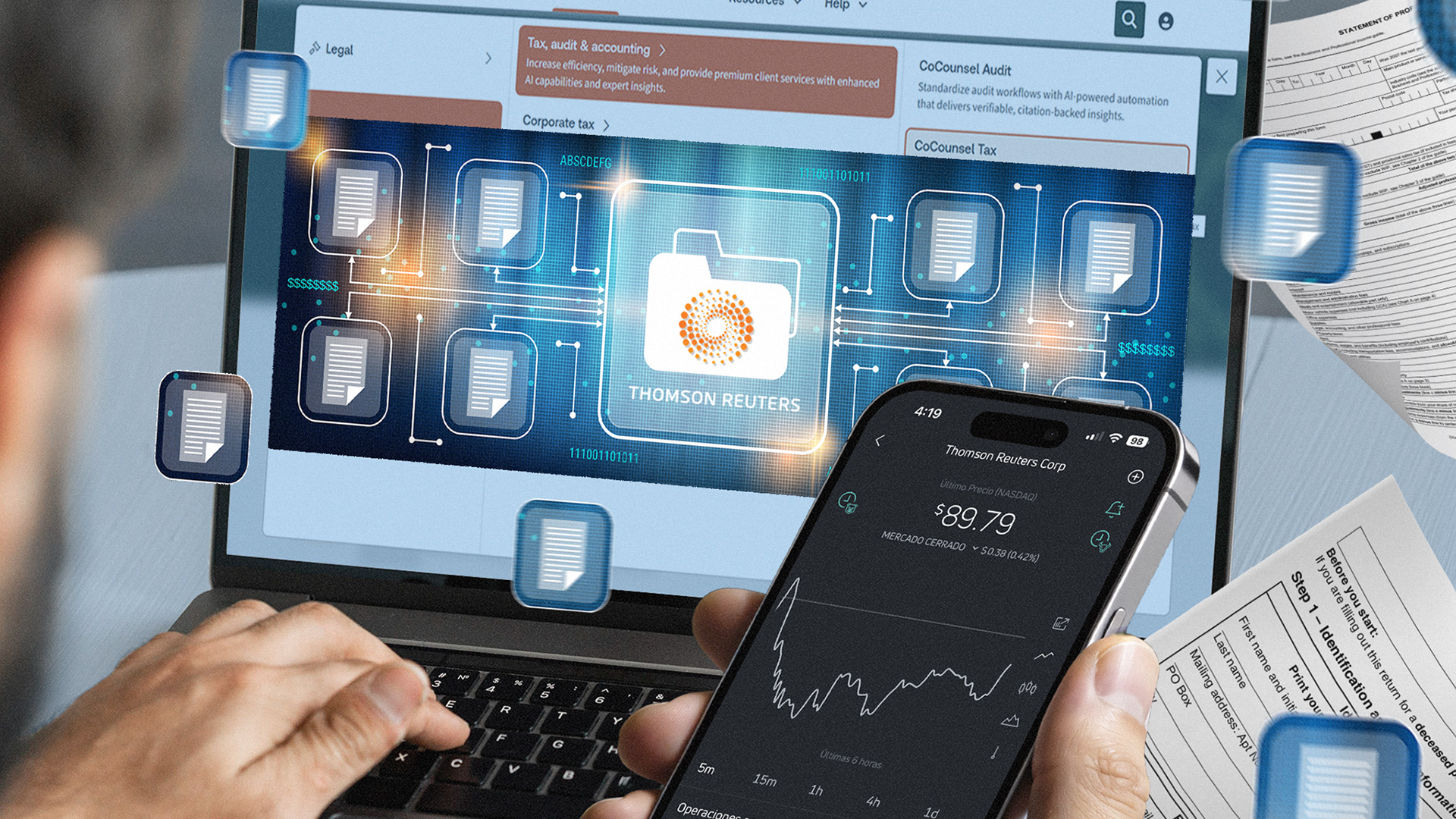
Fear of disruption to Thomson’s business by AI has sent the company’s stock reeling 48% over the past 12 months. AI obviously raises some uncertainty for Thomson. But it could just as easily help Thomson as hurt it. Even with the recent plunge, TRI shares have climbed 103% over the past 10 years.
So the company may have a bright future, even without much contribution from flagship Reuters.
The author owns shares of TRI and previously worked at Reuters.


Comments