



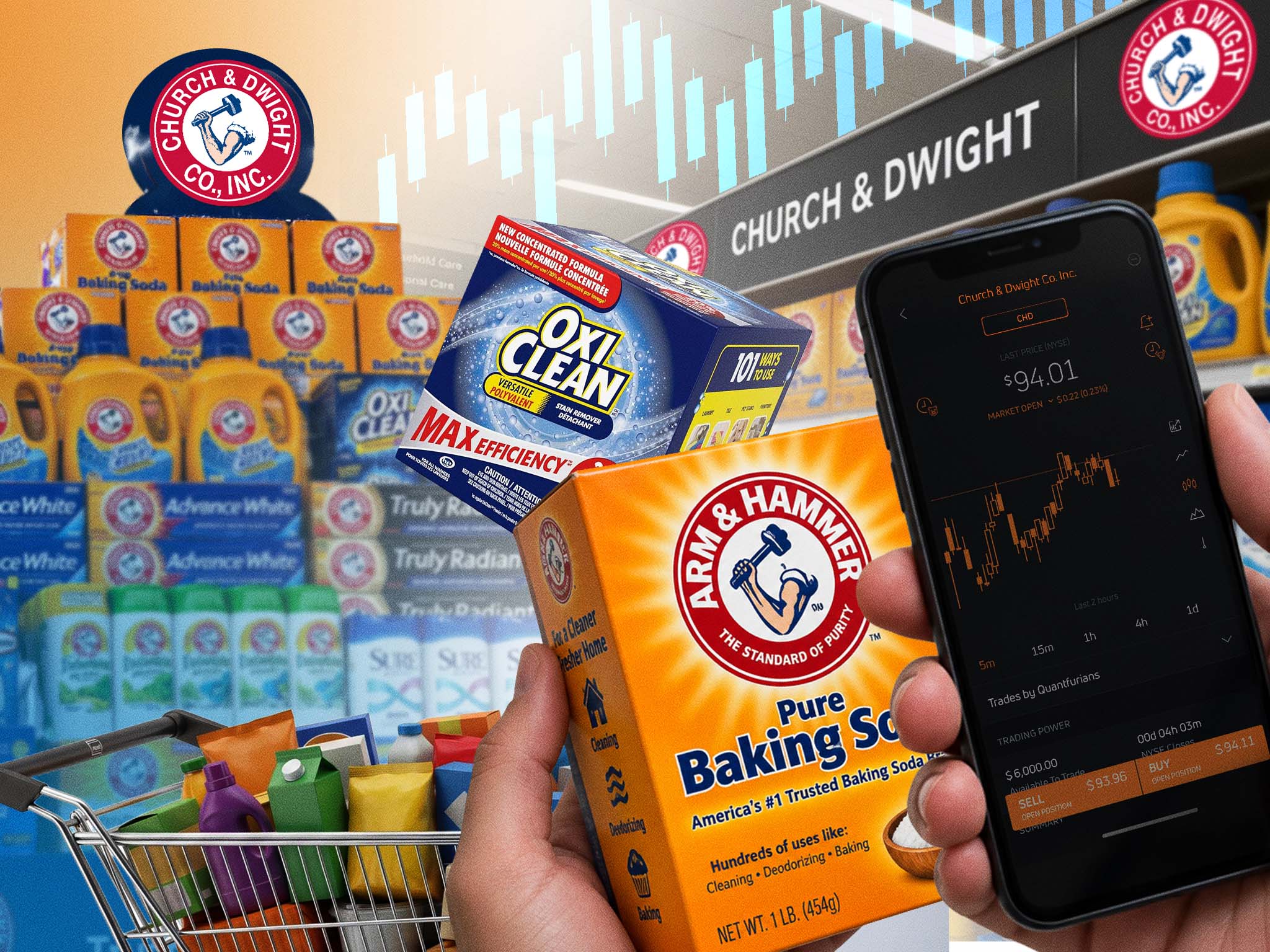


Consumer goods manufacturer Church & Dwight (NYSE: CHD) plans to add more products to its current lineup either through acquisitions or by developing them to appeal to consumers.
The company, which manufactures well-known cleaning products brand Arm & Hammer and fabric care, home care, health and well-being and personal care items, reported a 5.8% growth in organic sales as volumes rose 4.3% in the second quarter.
Revenue increased by 1.6% to $1.53 billion, beating Wall Street analyst estimates of $1.5 billion.
Church & Dwight reported a profit of $202.8 million, compared with $191 million in the same quarter a year ago.
Consumers have been shopping and stocking up on household and specialty products, which both reported higher sales during the quarter. Revenue in the U.S. rose slightly by $1.7 million or 0.1% increase to $1.15 billion while organic revenue rose due to a 3.6% increase in volume, driven by Therabreath mouthwash and toothpaste, Hero, Arm & Hammer cat litter and Zicam.
International sales also rose by 7.2% or $19.9 million to $297.5 million. Organic sales grew by 9.1% driven by higher volume of 7.3%, driven by the Therabreath, Hero and Batiste brands.
“Our categories are growing ahead of our original expectations and Church & Dwight is growing even faster,” said CEO Rick Dierker during an earnings call with investors. “Consumer spending remains resilient.”
Church & Dwight also acquired the fast-growing Miss Mouth’s Messy Eater, a stain remover, in June and reported “consumption grew over 50% and gained almost 3.5 share points during the quarter,” he added.
Management increased its revenue estimate for 2026 and estimates it to be flat to up 1%, instead of down 0.5% to 1.5%. Organic sales growth is now anticipated to increase by 4% to 5% from prior expectations of 3% to 4%.
Church & Dwight is also continuing to add to its portfolio of household goods. New products that are launched in 2026 are “expected to account for about half of our organic growth as we innovate in key categories across the portfolio,” Dierker said.
Digital sales have been active as consumers increasingly turn to shopping online. Global e-commerce increased by 22.7%. Global online sales now represent 25.5% of total consumer spending.
Shares of the company rose by 11.85% during the past year.
Acquisitions fueling growth
Church & Dwight, which has a market cap of $23 billion, has been active in acquiring brands to build up its portfolio to compete with its much larger peers such as Procter & Gamble (NYSE: PG) with a market cap of $346 billion and Colgate-Palmolive (NYSE: CL) which has a $69 billion market cap.
The company’s U.S. acquisitions are “paying dividends across the world in a big way, where brands like Hero and Therabreath are driving outsized growth,” he said. “Our ability to scale brands to so many countries so quickly is getting better and better.”
Management continues to look at potential targets, especially international ones to expand the company’s growth. Over the past six months to a year, executives have “filtered through 100 deals,” Dierker added.
“We have a process here now, but it’s starting to go from theoretical to practical,” he said. “We will continue to pursue acquisitions that meet our strict criteria with an emphasis on fast-moving consumable products, similar to the successful Therabreath, Hero, Touchland and Miss Mouth’s acquisitions.”
The household goods company has been on an acquisitive streak and will likely do more deals, wrote Erin Lash, a sector director of consumer equity research for Morningstar. Church & Dwight has proven that some of its previous deals have been successful as both revenue and market share gained.
“We think Church could boost sales by expanding the distribution of recently acquired TheraBreath mouthwash, Hero pimple patches, and Touchland hand sanitizers in the US and abroad,” she wrote.
Dierker, who was named CEO in March 2025, wants to increase the company’s lineup of household and personal care products.
“After a two-year acquisition drought and just a month after Rick Dierker became CEO, it was no surprise that Church announced the addition of Touchland, a business best known for hand sanitizers, for $700 million in May 2025, equating to trailing price/sales and EBITDA multiples of 5 and 12, respectively,” Lash said. “Nair now controls around 40% of the hair removal/bleach market, up from one-fifth when Church acquired the brand in 2001.”
Not all deals have proven to be blockbusters. During the past year, the company closed its showerhead business for its Flawless, Spinbrush, and Waterpik brands, which generated $150 million in annual sales in aggregate. The company also sold its “languishing” vitamin, mineral, and supplement business in 2025, she added.
“We see the merit in parting ways with underperforming brands to enhance focus,” Lash said. “However, we still think it hungers for deals, particularly outside the U.S., which adds regulatory risk and the possibility that Church overpays to chase growth abroad.”
About one-third of Church & Dwight’s products provide “value offerings, which inherently appeal to cash-constrained consumers,” she wrote.
Adding new innovative products, increasing online sales and increasing its acquisitions could lead to higher growth for Church & Dwight.


Comments