



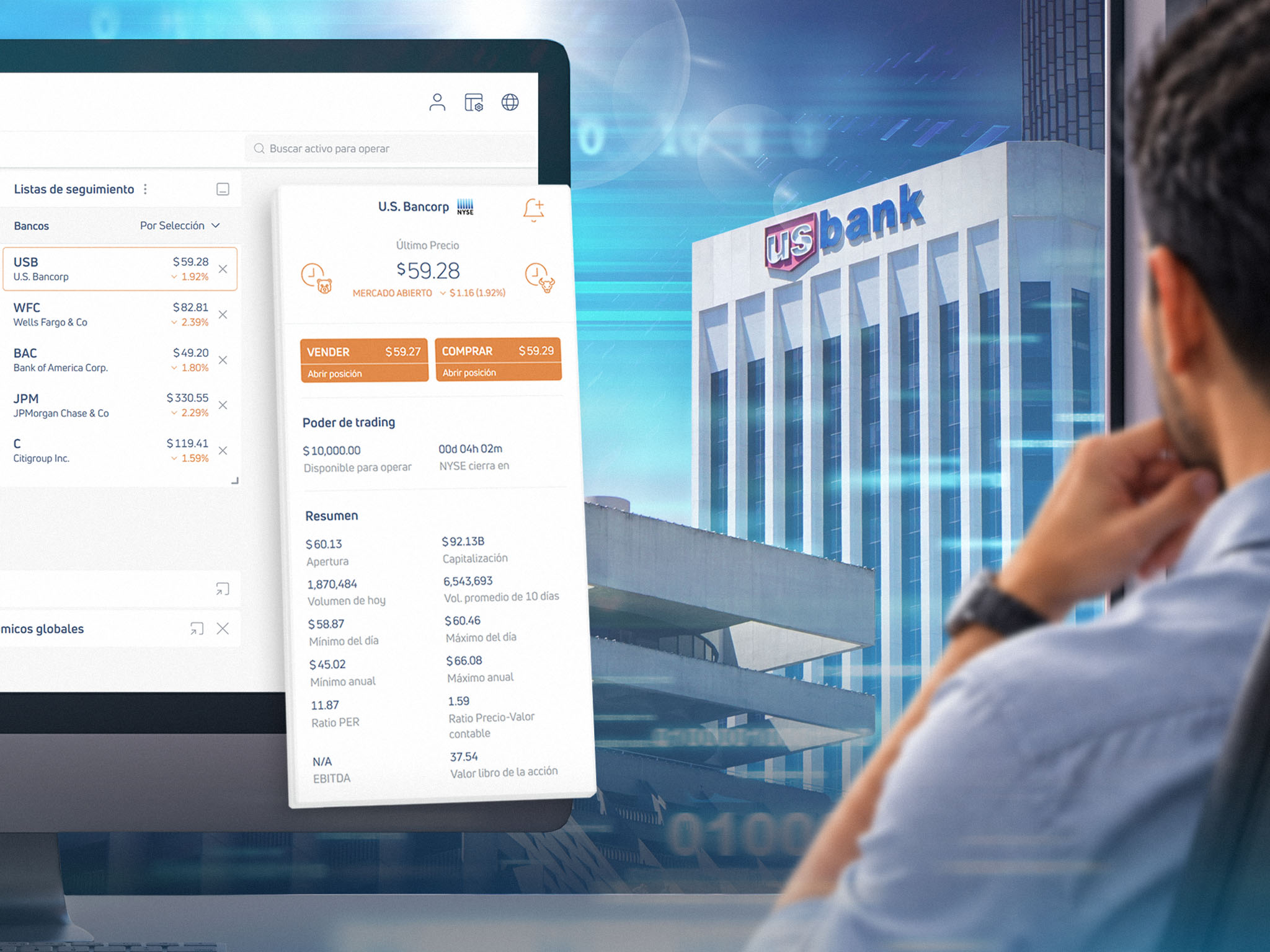


When investors and analysts discuss U.S. commercial banks, attention usually centers on the biggest four – JPMorgan Chase (NYSE: JPM), Bank of America (NYSE: BAC), Citigroup (NYSE: C) and Wells Fargo (NYSE: WFC).
But U.S. Bancorp (NYSE: USB) deserves some love too. It’s the country’s sixth biggest commercial bank and the largest regional bank. “Regional” is just an industry term to describe U.S. banks outside of the top four. U.S. Bancorp has a strong national presence.
“It has consistently earned returns on tangible equity superior to peers and in excess of our estimated cost of equity of 8.9%,” Morningstar analyst Maoyuan Chen wrote in a commentary.
It has the fourth-largest deposit share in its footprint. And U.S. Bancorp is working to expand that share, announcing in July that it will increase its spending on branches by 50% annually from then.
The bank is also one of the nation’s biggest players in credit and debit card issuance, merchant processing and corporate trust services. Its other fee businesses include wealth and asset management and fund administration. The combination of all its services gives it economy of scale.
But despite its heft ($706 billion), as a regional bank, U.S. Bancorp has lower capital requirements than its money-center brethren, giving it an advantage on returns. Analysts think the bank has a strong capital position, and Chen forecasts that it will keep earning returns “comfortably” above its cost of capital in coming years.
‘Prudent lending, deposits
As for loans, “the bank’s history of prudent lending — and the fact that the makeup of its loan book has not changed that much over time — gives us comfort with the risks,” she said.
Looking at deposits, U.S. Bancorp pays slightly more than competitors, thanks mostly to its more expensive corporate trust deposits, she noted. Those deposits account for about 12% of its total.
But excluding the corporate trust segment, its deposit performance bests that of most peers, as evidenced by its hefty market share, Chen said. “U.S. Bancorp’s overall cost of funding is slightly higher than its regional peers but its scale, operating efficiency, and fee income franchises matter more.”
The company’s wide array of fee businesses give it a leg up against other regional banks. It has one of the top fee income-net revenue ratios (over 40% in 2025) among U.S. regional banks, showing its ability to monetize its customer relationships, Chen said.
It bought highly-regarded investment bank BTIG in June for $725 million-$1 billion (depending on performance-based payouts). That increases U.S. Bancorp’s capital markets products, though Chen doesn’t currently expect any revenue synergies.
New regime
The company’s performance was lagging when Gunjan Kedia took over as CEO in April 2025. But she has turned things around by tightening expenses, boosting organic growth and restructuring the payments business. Chen expects that to continue, including investment in other fee products.
U.S. Bancorp’s stock has jumped 28% over the past year, compared to a 15% gain for the KBW Nasdaq bank Stock Index.
The bank posted stellar earnings in the third quarter. Net revenue hit a record high, rising 8.7% year on year. That included a 5.6% ascent in net interest income and a 14.9% increase in fee revenue. Overall net income climbed 10%. U.S. Bancorp also lifted its projection for full-year 2026 revenue growth to a range of 8%-9% from 7%-9% previously.
It may be able to bank on continued success.
The author owns U.S. Bancorp shares.


Comments