




The Integrated oil giants Exxon Mobil (NYSE: XOM) and Chevron (NYSE: CVX) receive the most attention of companies in the energy market.
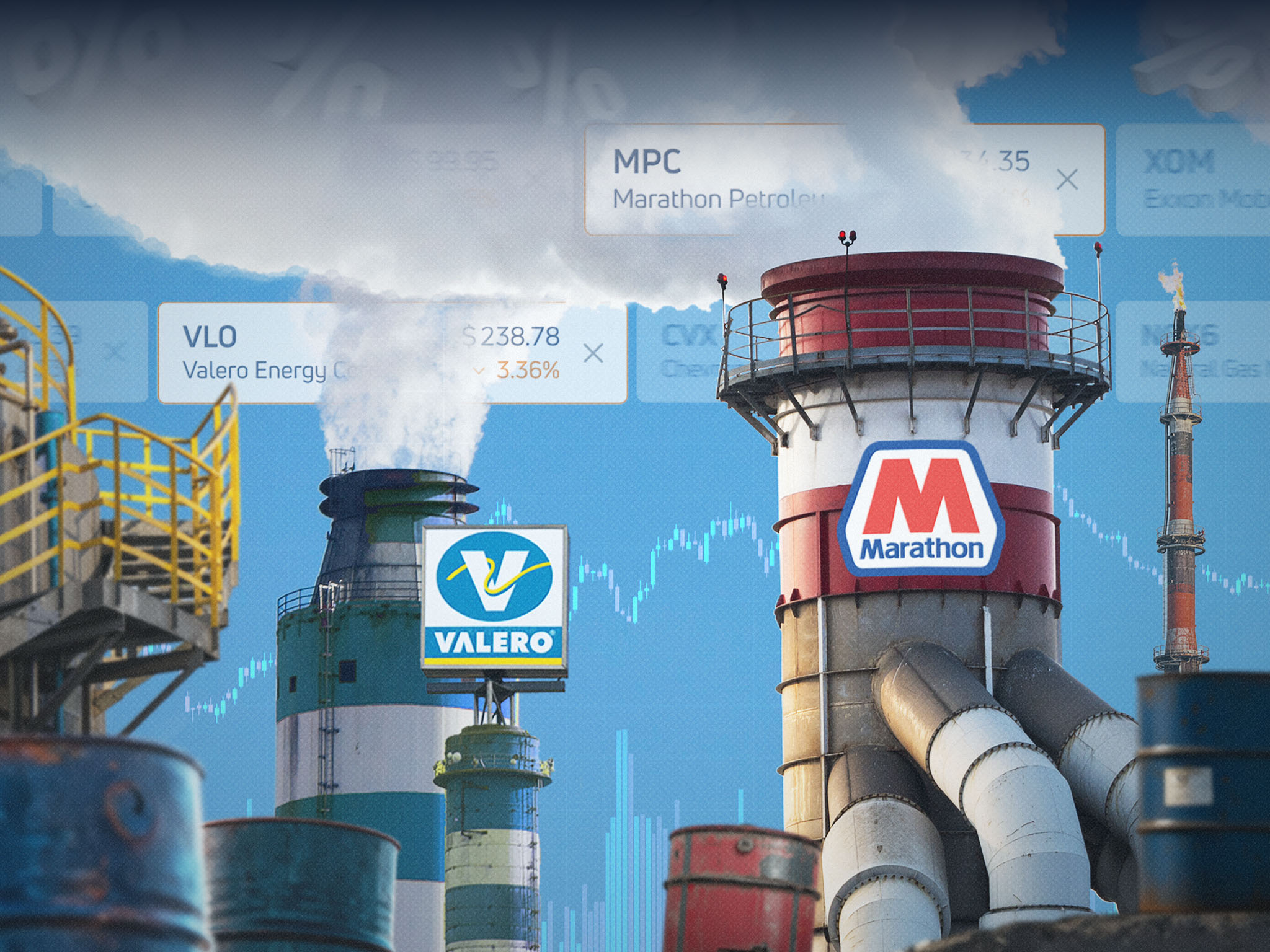
But the two biggest U.S. oil refiners – Marathon Petroleum (NYSE: MPC) and Valero Energy (NYSE: VLO) have far outperformed the two oil producing titans over one-, five-, 10- and 15-year periods. They also have beaten the S&P 500 index.
Marathon has produced annualized total returns of 73% for the last 12 months, 37% for the last five years and 22% for the last 10 years. For Valero, the numbers are 94%, 30% and 16%. Even during the past month, with war raging in the Mideast, the refiners’ stocks have handily outgained the producers.
The main reason why oil refiners historically outperform producers is that the refinery industry has capacity constraints that producers don’t – at least that was true until the Mideast conflict.
In any case, refinery shutdowns will lower U.S. output such that combined inventories of gasoline, distillate, and jet fuel will drop to 375 million barrels by late this year, the lowest since 2000, the Energy Information Administration predicted last year.
Marathon improves efficiency
As for the companies themselves, Marathon became the biggest U.S. refiner when it purchased competitor Andeavor for $23 billion in 2018. “Management efforts since the combination have focused on improving its operating cost structure and competitiveness, both of which they have succeeded in doing,” wrote Morningstar analyst Allen Good.
Various cost-savings tactics, including closure and conversion to biofuels for high-cost refineries, allowed Marathon to cut its operating costs by about 17%, he noted.
Marathon’s portfolio now consists entirely of high-quality refineries with a complexity rating on par with peers. That means it now has a greater ability to process lower-quality, lower-cost heavy and sour crude oil into high-value clean products such as gasoline or diesel, Good said.
Meanwhile, the company is expanding its midstream capacity, with $3.5 billion of acquisitions in that segment last year. Midstream is the sector of the oil and gas industry that connects producers to consumers by transporting, storing, and processing the raw product.
Marathon differs from many refiners in that its midstream segment contributes a greater share of earnings than refining, Good said. Also midstream cash flow covers the company’s dividend, allowing all refining free cash flow to go toward share repurchases.
Valero’s high quality
Turning to the second biggest refiner Valero, “it remains well positioned for almost any market environment, thanks to its high-quality refining assets and their location,” he said. That gives it greater feedstock flexibility.
Specifically, its complex assets and concentration in the Gulf Coast give it the access and capability to process light or heavy crude, depending on which offers the best economics. That’s what allows Valero to succeed regardless of market conditions, Good said.
Valero is the most complex refiner in the U.S., meaning it can most easily process cheaper, lower-quality crude. That has given the company a cost advantage over rivals and allowed it to increase profit margins, Good said. He expects this advantage to persist.
The company is investing in several improvement projects. That includes an optimization at a fluid catalytic cracker in Louisiana. It’s trying to boost efficiency and increase the yield of high-value products like alkylate, adding over $100 million in annual EBITDA (earnings before interest, taxes, depreciation and amortization).
Looking outward, Valero is the biggest exporter in the refiner space, and export markets should stay strong, Good said. “So this should remain a competitive advantage for Valero, as it enables the firm to capture higher margins and maintain high utilization levels.”
While the Mideast war may be something of a wildcard, the outlook remains sunny for Marathon and Valero.


Comments