


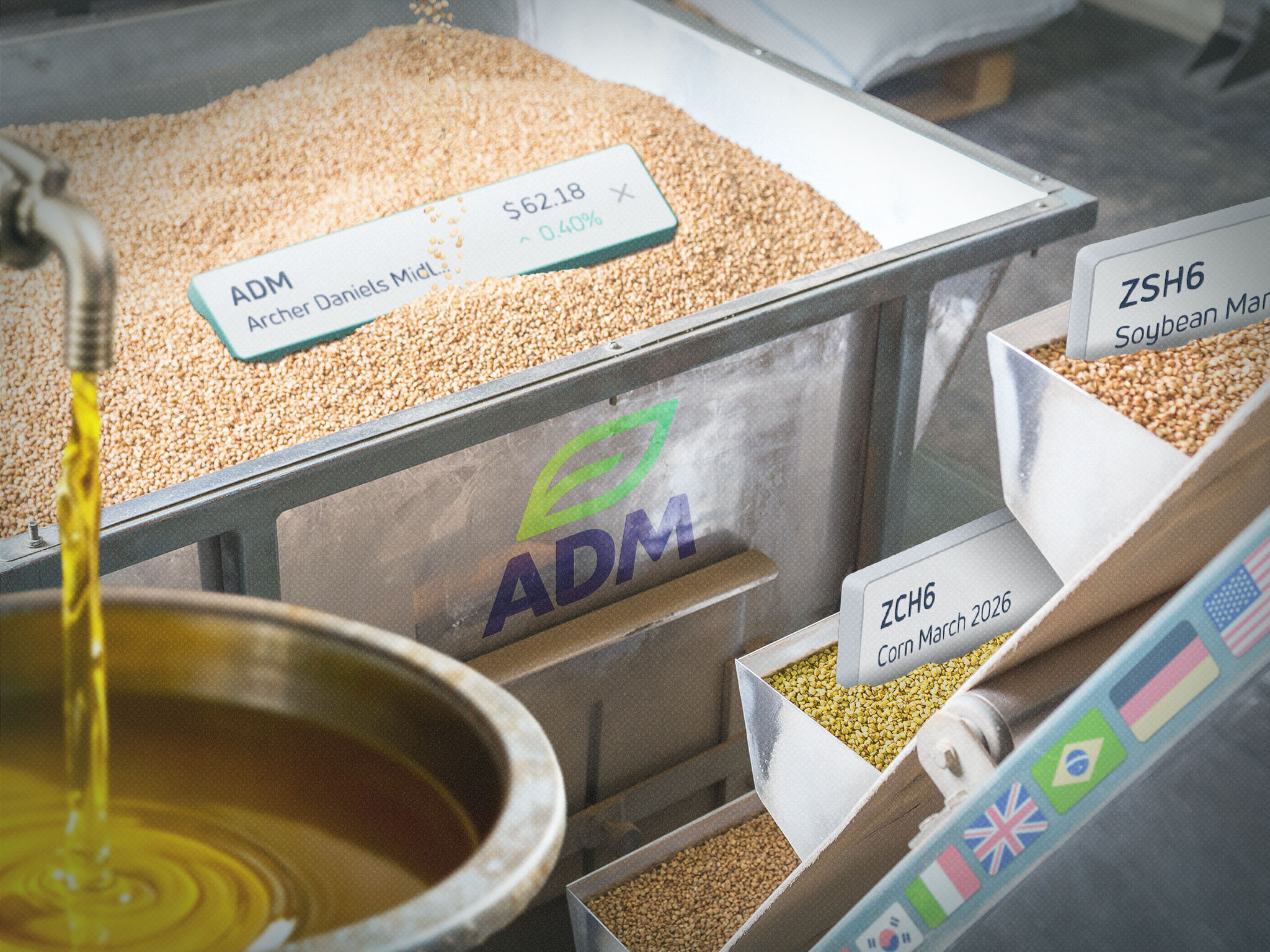


Archer Daniels Midland (NYSE: ADM), one of the top four agricultural commodities processors in the world, has a storied history dating back to 1902. Its near-term outlook appears to be up in the air, dependent on U.S. trade and biofuels policy.
(The other three top companies are Cargill, Bunge (NYSE: BG) and Louis Dreyfus).
Archer has three divisions: agriculture services & oilseeds, carbohydrate solutions and nutrition. AS&O buys, processes and transports agricultural commodities such as soybeans and corn. It crushes them into oil and meal.
The carbohydrate solutions business provides plant-based ingredients like starches, sweeteners (including fructose and corn syrup) and ethanol, a biofuel often mixed with gasoline. The nutrition unit offers ingredients for human and animal nutrition, including plant-based proteins, flavors and pet food.
AS&O accounted for 48% of the company’s operating profit in the first nine months of 2025, Carbohydrate solutions accounted for 38% and nutrition for 14%.
On the AS&O side, Archer Daniels generally benefits when commodity prices are rising or volatile. When prices are climbing, they can often sell processed commodities for more than they paid for raw ones. That price spread is known as the crush margin. Volatile prices in commodity markets also can push the crush margin higher.
Recent crush margins
Unfortunately for Archer Daniels, raw grain prices have dropped in the last 3 1/2 years, helping to push its crush margins sharply lower. Another factor sending crush margins down is
oversupply of Archer’s products, caused by a major expansion in global crushing capacity.
Also, uncertainty about U.S. biofuel policies and tax credits stifled demand for corn and soybean oil, key elements in biofuel production. That depressed prices for Archer’s products. In addition, trade discord between China and the U.S. led the Asian nation to cut its purchases of U.S. soybeans and soy meal.
The U.S. government expects to spell out its biofuel blending mandates for 2026-27 in the first quarter. A law requires billions of gallons of ethanol and other biofuels to be blended into the U.S. fuel pool each year. Biofuel producers like Archer want higher volumes of biofuels to be required. But oil refiners seek lower numbers.
Looking at China and soybeans, in November it agreed to purchase at least 25 million metric tons annually through 2028. But in the past, China has failed to live up to its U.S.-soybean purchase commitments. So there’s quite a bit of uncertainty as to what will happen this time around.
ADM’s assessment
Archer acknowledges the issues with biofuels and China. “We will continue … adapting to evolving trade policy and remaining flexible to offset the impact,” CEO Juan Luciano said in the company’s earnings conference call Nov. 4.
“Given the deferral in U.S. biofuel policy and other global movements, it is difficult to predict
the timing of when we will see a structural increase in biofuel demand.”
As a result of these unknowns, the company lowered its adjusted profit estimate for full year 2025 by about 16%. Revenue gained 2.2% in the third quarter from a year earlier, while operating profit fell 19%.
The stock has languished over the past five years, producing an annualized total return of 6.2%, far below the S&P 500’s 14.4% return. It has rebounded 28.4% in the last year.
But Morningstar analyst Seth Goldstein doesn’t see sustainable competitive advantages for Archer. “The commodity products ADM moves around the world are readily available from competitors,” he wrote.
“And the company has little pricing power over the products it buys and sells, making for slim margins.” Also, high capital costs are a burden. So don’t count on a roaring comeback for Archer.


Comments