




The last six months have been kind to banks amid falling interest rates and resilient economic growth. The KBW Nasdaq Bank stock Index rose 17% during that period.
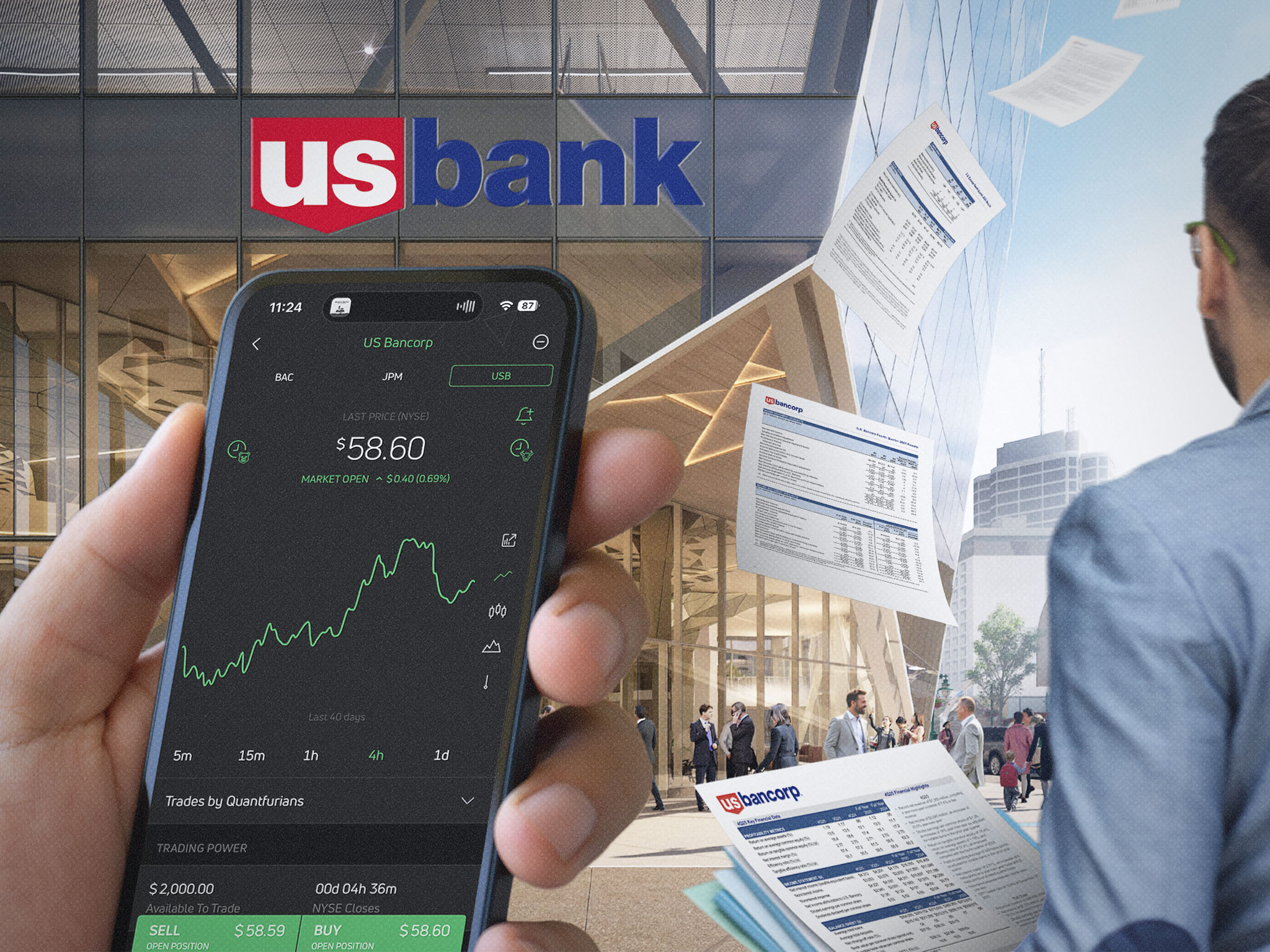
U.S. Bancorp (NYSE: USB), the country’s largest regional bank and seventh biggest overall, has particularly shined. Its stock soared 26% over the past six months. It has a long history of strong profits.
“Though some of its peer regional banks have been catching up in terms of scale and profitability, we still like the bank’s larger revenue mix from capital-light fee income,” wrote Morningstar analyst Maoyuan Chen.
“The bank has a unique mix of fee-generating businesses, including payments, corporate trust, wealth management, and mortgage banking, which sets it apart from most regional peers.” Corporate trust work consists of managing assets for corporate clients, particularly in debt or equity issuance.
Record Revenue
U.S. Bancorp generated record revenue of $28.7 billion last year, up 4.4% from 2024. That included a 7.8% gain in fee revenue, so fee-related activities are flying high. Adjusted net income climbed 14.6%. For 2026, the bank expects total revenue growth of 4% to 6%.
The company’s efficiency ratio improved to 58.6% last year from 62.3% in 2024. The ratio consists of non-interest expenses divided by revenue. So it measures how much spending it takes to produce $1 of revenue – the lower the ratio, the better. U.S. Bancorp’s success in this area will likely continue, with a ratio below competitors, Chen says.
That’s because of heavy technology investment, a large share of the deposit market, simplified segment operations and the bank’s breadth of products and distribution capabilities.
U.S. Bancorp’s excellent operating efficiency combines with a low-cost deposit base and conservative underwriting to give it cost advantages, Chen says.
Prudent underwriting
Deutsche Bank Analyst Matt O’Connor also cites the bank’s underwriting skills. “USB has long prided itself on strong credit risk management, and performance in recent years supports the narrative that volatility within the credit book is low,” he writes, as cited by CNBC.
The company is expanding its activities. Last month it agreed to acquire investment bank BTIG for $1 billion. U.S. Bancorp has grown its capital markets business over the past 15 years to $1.4 billion in annualized revenue, mostly in fixed income, Bloomberg reports. BTIG was slated to make about $750 million in adjusted net revenue in 2025.
“U.S. Bancorp historically had a smaller exposure to investment banking fees and trading income than some of its regional bank peers,” Chen says. “This bolt-on acquisition signals the bank’s willingness to gain more exposure in these capital-market-related earnings streams.”
Last year, U.S. Bancorp established a digital assets and money movement organization to include its own stable coin. The company “successfully completed a pilot to enable cross-border stablecoin transactions” in the fourth quarter, it said. Whether crypto proves to be a money maker for the bank remains to be seen.
But overall the future looks bright for U.S. Bancorp.
The author owns shares of U.S. Bancorp.


Comments