


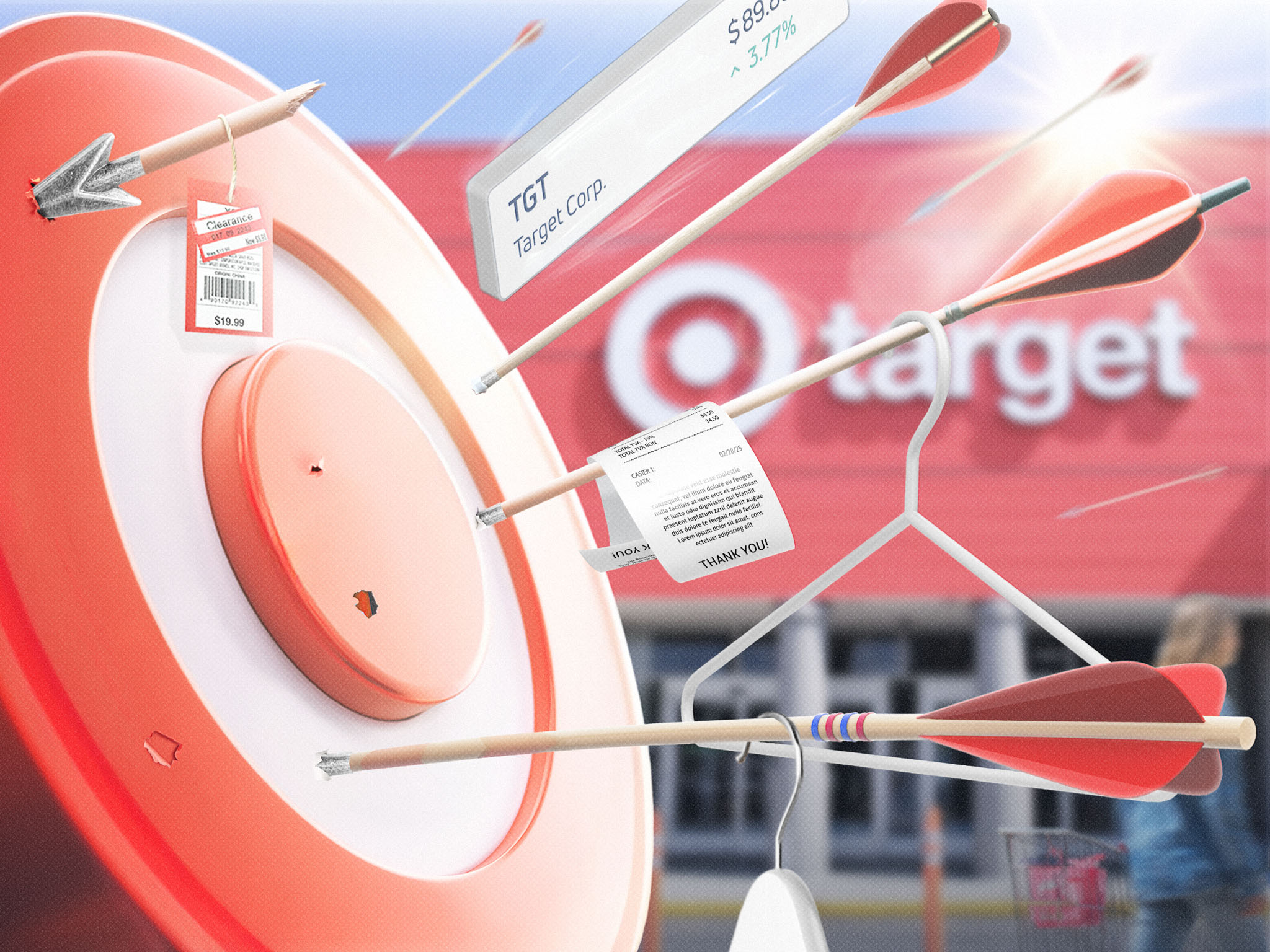


Target’s (NYSE: TGT) aim has been off during the last four years.
The retail heavyweight once known for its neat stores with moderate prices and designer styles is now known for messy stores with sparse shelves and uninspiring offerings. Target’s revenue has barely risen or dropped for 12 straight quarters.
And it’s not just customers who are unhappy. The company’s annual internal poll this summer showed that 40% of employees weren’t confident about the company’s future. Investors are disappointed, too. The stock has dropped 64% over the past four years.
Even politics has caused pain. In May 2023, the company put out its annual LGBTQ (lesbian, gay, etc.) Pride Month collection. Conservatives weren’t happy. In response to their protests, Target dumped some Pride products and moved the displays to less prominent parts of stores.
LGBTQ supporters didn’t take kindly to that. Not surprisingly, both the left and the right called for store boycotts, and sales stumbled. Then, earlier this year, Target decided to eliminate its diversity, equity and inclusion (DEI) program. That pleased conservatives but upset liberals.
Fundamental business mistakes
Politics aside, Target has made fundamental business mistakes. Its prices are high compared to discount competitors during an inflationary time. Some product selection is weak, and the in-store experience isn’t always pleasant, with long lines at checkout and some merchandise strewn about.
CEO Brian Cornell has promised for two years that the company would rebound with a concentration on unique products, good values, and better filling of its shelves. But that hasn’t worked so far.
Target’s revenue slid 1.5% in the fiscal third quarter ended Nov. 1 from a year earlier to $25.3 billion. Profit fell to $689 million from $854 million. The operating profit margin was only 3.8%, down from 4.6% a year ago.
“The quarter reinforced our thinking that Target’s path to recovery remains investment-heavy and execution-dependent,” wrote Morningstar analyst Brett Husslein. The company said this month that it’s investing $1 billion more next year to improve its stores, product selection, and digital operations, putting total new investment at $5 billion in 2026.
Target has named a new CEO, 22-year company veteran Michael Fiddelke, who is now chief operating officer. Some observers say Target would have done better choosing an outsider unchained by its recent failures. But others say the company can benefit from his experience. Target shares have slipped 15% since Fiddelke’s appointment was announced Aug. 20.
Embedded structural issues
Target faces some structural issues for which there’s no easy solution. It’s squeezed on the low end by Walmart (NYSE: WMT), Costco (NASDAQ: COST), and other discounters, “which offer better value and more defensible cost structures,” Husslein said. Then on the high-end, there’s Amazon (NASDAQ: AMZN), niche e-commerce platforms, and specialty retailers with strong product depth, speed, and brand curation.
“This leaves Target in a middle ground that requires flawless execution to maintain relevance,” Husslein said. “This precarious middle-ground positioning leaves Target without any structural defenses.” So it’s vulnerable to execution mistakes, such as inventory markdowns, digital slowdowns, or changes in discretionary demand, he noted.
To be sure, Husslein doesn’t think things will stay this bad for Target. “Its focus on elevating its assortment and upgrading the shopping experience can support a return to low-single-digit sales growth in the long term,” he said.
But the structural weaknesses remain. “Target operates in a fiercely competitive landscape, where scale, price, and speed dominate, and where consumer loyalty is increasingly fragmented,” Husslein explained. “In this environment, execution alone is insufficient to generate moat-worthy [superior] returns.”
So let caution be your guide on this stock.


Comments