


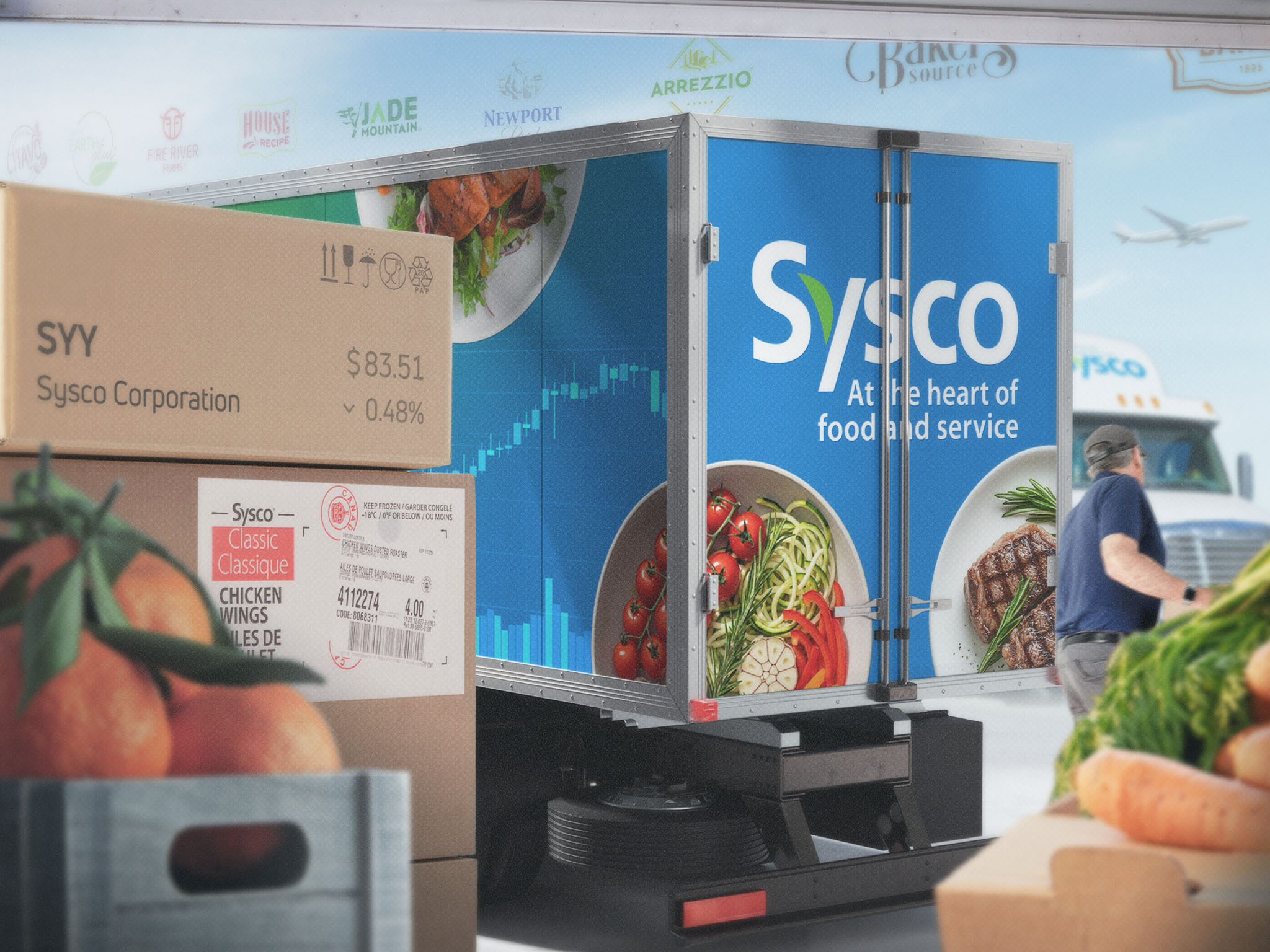


Sysco (NYSE: SYY), the world’s biggest food-service distributor, is producing stronger-than-expected growth, especially overseas.
The growth comes as high-income consumers continue to eat out, which is important for Sysco, as restaurants account for 62% of its revenue. Other customers include hospitals, schools and hotels.
Sysco provides a slew of food, beverages and supplies. The food and beverages include meats, produce and dairy. The non-food items include kitchen equipment, cleaning supplies and containers. The company has a market capitalization of $40 billion.
Its competitive advantage starts with its size. Sysco makes up 17% of the U.S. food service market, far surpassing its two biggest competitors: US Foods (NYSE: USFD) at 11% and Performance Food Group (NYSE: PFGC) at 6%. The company’s “dominance is far stronger than share alone may imply,” wrote Morningstar analyst Kristoffer Inton.
“Restaurants demand timely and consistent delivery to serve the freshest food. Sysco allows restaurants to buy the bulk of their needs from a single source rather than dozens of producers, simplifying logistics and saving time.”
Sysco’s differentiators
Sysco’s products are no different than those sold by its competitors. But, “Sysco can differentiate on fulfillment, selection, quality, and freshness while also offering services like menu planning and kitchen setup advice,” he said.
That’s what has enabled Sysco to grow more than its competitors over the years. And this should continue, with the company averaging annual sales growth of about 4% over the next five years, Inton said.
Sysco’s size gives it purchasing power with producers. It also has more dense routes than its smaller competitors, keeping shipping costs low.
It’s no wonder then that Sysco posted an EBITDA profit margin of 5.3% for fiscal 2025, ended June 28, creaming US Foods‘ margin of 3.7% and Performance Food’s margin of 2.4%. EBITDA is earnings before interest, taxes, depreciation and amortization.
The two Sysco rivals have talked about merging but dropped negotiations in November, erasing a potential threat for it.
Latest earnings news
Sysco produced strong second-quarter earnings for fiscal 2026, ended Dec. 27. Revenue gained 3% from a year earlier to $20.8 billion. The climb was led by a 7.3% ascent overseas, while domestic sales gained 2.4%. Foreign sales account for 19% of Sysco’s total revenue.
The international sales increase covered every Sysco geography. It stemmed from “expanded supply chain capacity, increased availability of Sysco-branded merchandise, increased sales head count and easier-to-use technology,” Sysco CEO Kevin Hourican, said in the company’s Jan. 27 earnings conference call.
Gross profit increased 3.9% in the latest quarter from a year ago, though net profit slid 4.2%. The gross profit margin registered 18.3%, up 15 basis points. The company predicted volume growth of at least 2.5% in the second half of the fiscal year. And it pushed its full-year projection for adjusted earnings-per-share growth to the high end of its previous 5% to 7% range.
Investors reacted positively to the earnings news, pushing shares up 12% since it was released early Jan. 27. Thanks largely to the slow growth in its industry, Sysco has generated annualized total returns of just 4.4% over the past five years.
But Sysco’s business may have tasty days ahead. Its annual return on invested capital should average about 20% over the next five years, said Morningstar’s Inton. “Sysco’s dominance is unlikely to be matched.”
The author owns shares of Sysco.


Comments