




Value stocks have endured tough times in recent years, as technology-led growth stocks have outperformed.
But one exception to the weak trend for value stocks is Philip Morris International (NYSE: PM), the world’s biggest tobacco company. Selling an addictive product helps.
And it has shifted from a purely cigarette purveyor (Marlboro and Parliament are its leading brands) to scoring 40% of its revenue from smokeless products. That obviously makes sense as anti-smoking campaigns limit demand for cigarettes around the world.
Investors have reacted positively, with the company generating an annualized total return of 16.9% for the past five years. That beats the S&P 500’s return of 14.7%. Philip Morris has a market capitalization of $246 billion.
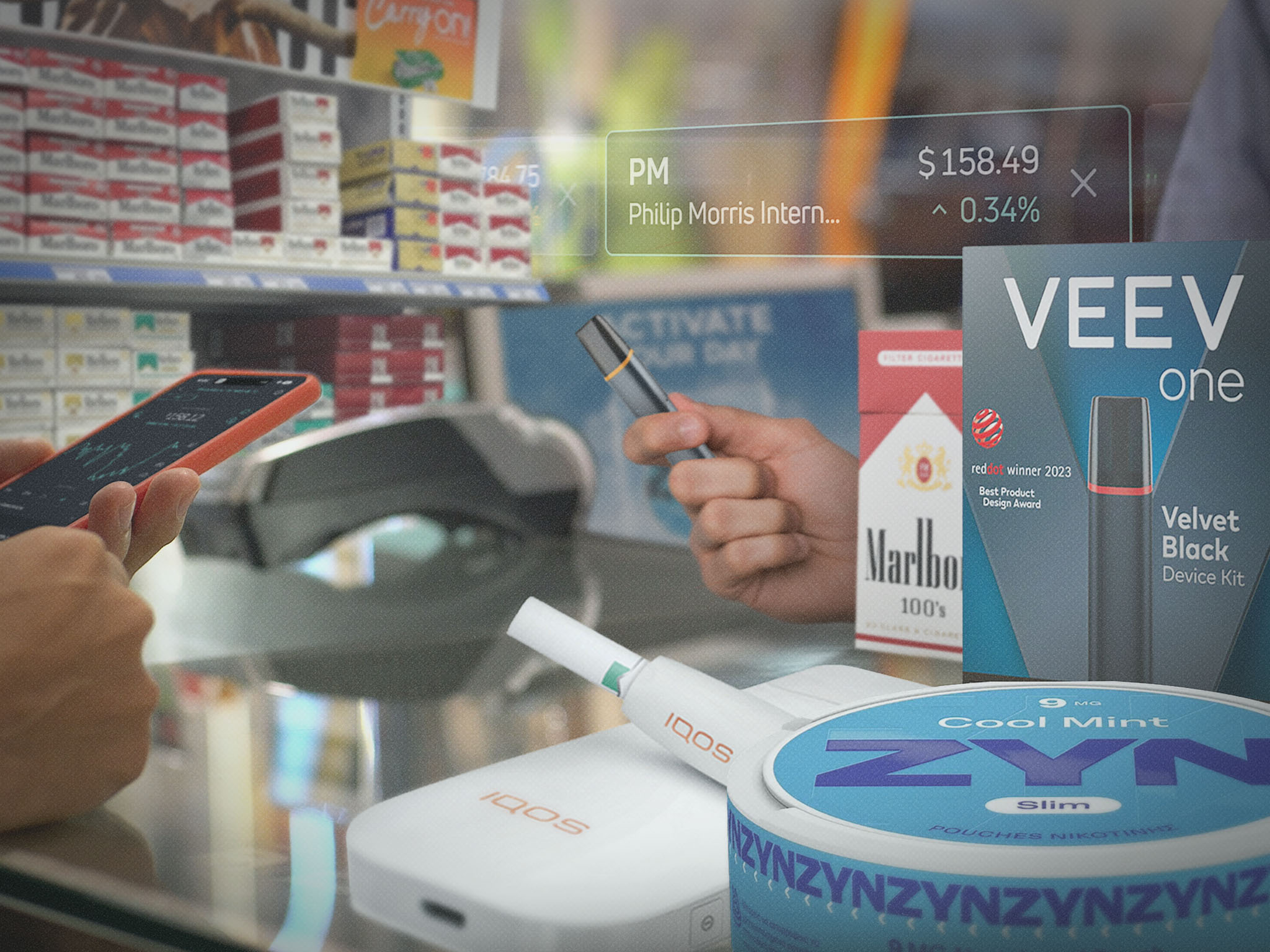
Its smoke-free products include vaping systems (flagship brand VEEV), devices to smoke heated tobacco sticks (Iqos) and tobacco pouches (Zyn). They are available in 100 markets worldwide. Almost all of PMI’s revenue comes from overseas, though Zyn is widely sold in the U.S.
Strong revenue and profit
The company’s revenue from smoke-free products soared 17.7% in the third quarter from a year ago, while combustible (cigarette) revenue climbed only 4.3%. Total company revenue rose 9.4% to $10.8 billion. Earnings per share gained 13%. The adjusted operating margin increased to 43.1% in the latest quarter from 41.9% a year ago.
PMI is No. 1 in market share for heated tobacco sticks and nicotine pouches. In 2024, Iqos enjoyed a 65% share of the $36 billion heated tobacco segment, which has grown nearly 20% annually over the last five years, according to Morningstar. A heated tobacco stick produces gross profit equaling 2.6 times that of a cigarette.
And while expenses are higher for heat sticks than cigarettes at current production levels, Morningstar analyst Kristoffer Inton believes that ultimately heat sticks will match if not exceed adjusted profit margins for premium cigarettes.
As for pouches, PMI’s shipments of them jumped 36.4% in the third quarter from a year ago. U.S. shipments benefited from product giveaways, but PMI expects the U.S. to remain its most profitable region. Geographic expansion fueled overseas gains.
As for cigarettes, price increases allowed revenue to rise in the third quarter, despite a 3.2% decline in shipments. PMI aims to increase smoke-free products’ share of its revenue to 67% by 2030, but Inton sees 50% as more likely.
Powerful fundamentals
Still, he points to strong fundamentals for PMI. “First, the very nature of tobacco creates customer loyalty and gives companies like PMI significant pricing power,” he notes. As you are well aware, the nicotine in tobacco is addictive, keeping customers coming back for more, despite tobacco’s negative health effects. In most markets, the smoking rate is shrinking only a bit, Inton says.
In addition, research shows that high-priced cigarettes are associated with lower quitting rates. And PMI has the heaviest concentration in premium cigarettes among large-cap cigarette makers, he says. Around 55% of its shipments in OECD countries consist of premium cigarettes (led by Marlboro and Parliament), compared to 25% for the industry as a whole.
Tobacco consumers also are brand loyal, Inton explains. One study found that 87% of smokers have a preferred brand, with 44.4% citing “a lot” of loyalty to their brand. And 83% cited taste as a determining factor for their choice, compared to 51.7% citing price. So PMI may be able to continue raising prices, after high-teens percentage price increases annually from 2021 to 2024.
Philip Morris is doing a lot more than just blowing smoke.


Comments