


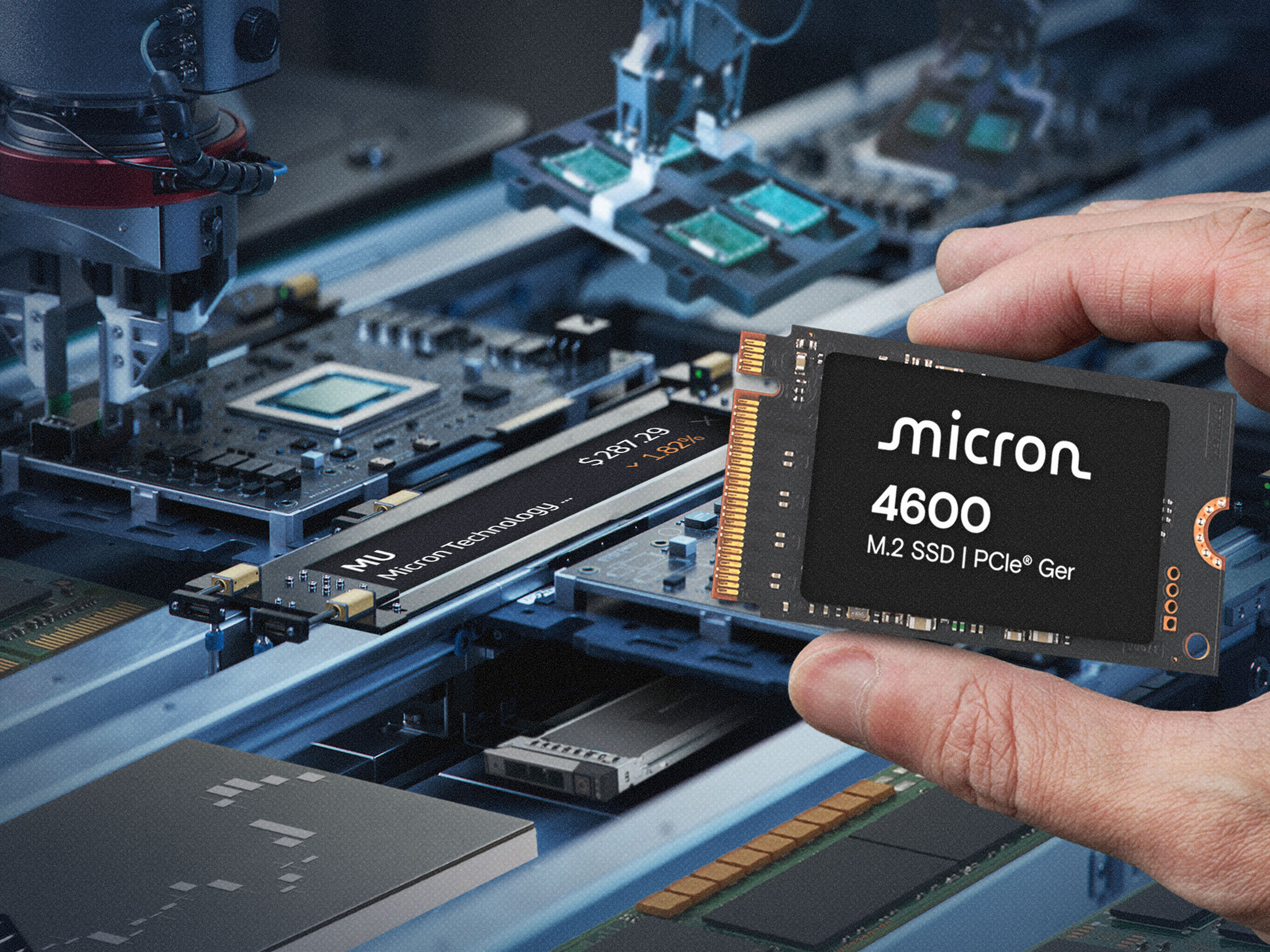


Micron Technology (NASDAQ: MU) is counting on the sales of its memory chips to continue to grow exponentially as demand rises, especially in industries such as artificial intelligence that are building up their infrastructure needs.
The chipmaker, which also makes solid-state storage chips and is the fifth-largest producer globally, estimated that its revenue will more than double to $18.7 billion in the current quarter ending in February, setting a new record.
Memory chips are ubiquitous and used in dozens of devices that are used daily, from smartphones to laptops to gaming consoles. Shareholders have been rewarded since the stock has risen by a massive 216.6% in the past year.
Micron’s server units increased by the “high teens” in 2025, said Micron CEO Sanjay Mehrotra on an earnings call with analysts.
“This growth in AI data center capacity is driving a significant increase in demand for high-performance and high-capacity memory and storage. Server unit demand has strengthened significantly,” he added.
Micron reported net income of $5.24 billion during the first quarter, while revenue rose by 57% on a year-over-year basis.
Memory chip prices are increasing
The surge in building data centers to complete the computing needs of AI has been one factor in the rise of memory chips. The additional demand generated by the rising use of AI across various industries has also put pressure on the price of memory chips.
The increased demand has pushed prices higher. The spot price of a module that is used in these chips has jumped by over 60% during the past six months, according to TrendForce, a market research provider. By next quarter, the price is forecast to reach $500, which is almost double the price of the same period a year ago.
Both memory and storage chips have seen their supply dwindle as the AI data center build has depleted some of the existing supply.
AI applications require higher bandwidth memory, and Micron is one of the three companies that manufactures these chips that are used by companies such as Advanced Micro Devices (NASDAQ: AMD).
But William Kerwin, a senior equity analyst for Morningstar, cautions investors that the use of Micron’s chips can be cyclical. Some of its chips are used for industrial equipment and automobiles.
Micron currently maintains the third place in market share in dynamic random access memory or DRAM chips and the fifth place in not-and or NAND flash chips.
Both of these two markets for chips are susceptible to downturns in demand and the economy.
“We expect Micron to thrive in periods of strong demand and pricing but to be vulnerable to down cycles that compress shipments, prices, and profits,” he wrote. “We see these chips as commodity-like and suppliers like Micron producing mostly fungible chips.”
The chipmaker could be impacted by supply and demand factors, especially if the market winds up with a surplus of chips.
However, the demand to build AI infrastructure will “drive more than 100% growth in fiscal 2026 after producing over 60% revenue growth in fiscal 2024 and nearly 50% growth in fiscal 2025,” Kerwin added.
“In the short to medium term, we see Micron benefiting from a snap back and tremendous cyclical upswing,” he wrote. “We see AI-driven demand for Micron’s HBM and DRAM chips as the firm’s largest growth driver, going forward. We expect another strong year of growth in fiscal 2027.”
Next-gen HBM4 chips rising in demand
But Mehrotra said during its earnings call that the company signed agreements on volume and pricing for its entire supply of the higher bandwidth memory for next year. This also includes its next-generation HBM4 chip, which will contribute to a large percentage of its revenue in the future.
By 2028, Micron estimates a $100 billion total addressable market for HBM, beating its previous forecast by two years, the CEO said.
Although HBM chips are a type of DRAM chip, the industry has estimated that these high-bandwidth memory chips could soon surpass and generate more revenue than the DRAM market at the end of 2024, Mehrotra added.
Micron is also in talks with its current customers to talk about multiyear contracts and is
“focused on maximizing our production output,” by increasing its technology nodes and spending money on adding clean rooms to bulk up its supply, the CEO said.
The investments in AI and data centers, along with the need for higher bandwidth memory chips for industrial equipment and electronic devices such as smartphones, tablets, and gaming consoles, will generate higher growth and margins for Micron.


Comments