


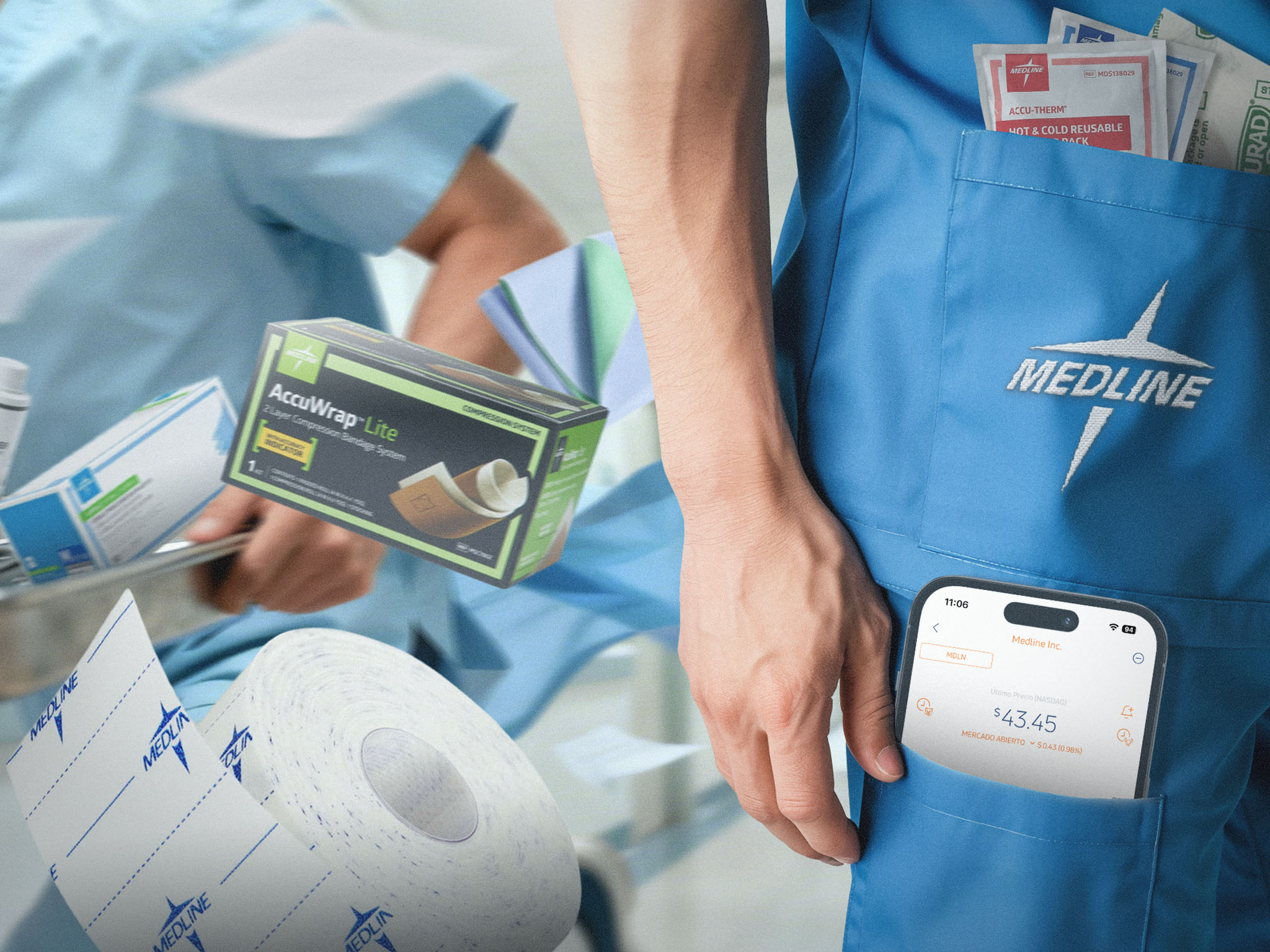


Known for its legendary blue and pink striped blanket that swaddles newborns in hospitals, Medline (NASDAQ: MDLN) started as a family business that is now worth $58 billion.
Over the years, the company has flown under the radar as it expanded, but now sells over 335,000 hospital and surgical products, such as Curad bandages and gowns for patients.
Medline sold a majority stake to private equity firms Blackstone Group, Carlyle Group, and Hellman & Friedman before going public last December with the largest IPO of the year.
The surgical and medical products manufacturer Medline reported sales in the fourth quarter of 2025 grew to $7.8 billion, an increase of 14.8%, compared to $6.8 billion in the same period in 2024.
The growth came from organic sales rising 14.4%, driven mostly by increased volumes along with more revenue from the Medline brand and supply chain solutions segments.
The company ended 2025 with $2.4 billion in total new customer signings and revenue of $28.4 billion.
Medline reported a lower fourth quarter net income of $180 million, a decrease of 37.7% from the same period due to tariffs and higher operating costs, including hiring more employees and IPO-related expenses, which was partially offset by higher net sales.
The company raised $6.26 billion in an initial public offering at the end of 2025. The shares initially traded at $29 a share and are now trading at $44, a 51% increase. Medline’s IPO was the largest one of 2025, which had given it a valuation of over $50 billion.
Family-operated company worth $58 billion
The former family-run business kept a low profile for several decades as a privately held company. The company was founded by brothers James and Jon Mills in 1966. Medline’s first IPO took place in 1972. The brothers bought back shares of the company five years after it went public, which remained private until last year.
In 1997, James’s son, Charlie Mills, became Medline’s CEO and served a long tenure of 26 years. Mills retired in 2023 when Jim Boyle, who joined the company in 1996, was chosen as the first CEO who is not a family member.
In 2021, the company sold a majority stake to the three private equity firms, but the family remained the single largest shareholder after the buyout.
Medline manufactures about one-third of its products, including over 200 million surgical procedure trays each year. The remainder of its medical supply products and instruments are distributed from 40 countries, which strengthens its supply chain.
The company’s products include a diverse array of items, such as patient gowns and other medical supplies and instruments used by doctors’ offices, clinics, labs, and hospitals. Medline now employs 45,000 workers globally in 125 countries.
Medline’s growth appears to be steady, estimating an organic sales increase of 8% to 9% for 2026. The company still faces tariff constraints of an estimated $200 million that will impact its margins this year.
The company’s expansion game-plan has been strategic, with its last acquisition occurring in 2024 when Medline purchased Ecolab’s surgical solutions business. In March, the company said it would build a 1.2 million-square-foot distribution center in Midlothian, Texas, to add to its current roster of 45 distribution centers in the U.S.
Medline’s balance sheet is stronger after it used proceeds from its IPO to pay down $4 billion of debt. Medline’s net debt/EBITDA, which was 3.1 times at the end of 2025 to “continue improving from deleveraging prioritization and durable cash flow generation,” wrote Keonhee Kim and Rashmi Nair, equity analysts for Morningstar. “This improved financial flexibility positions the firm to invest in growth while maintaining balance sheet discipline.”
Medline’s growth will continue to rise steadily, especially since its retention rate at hospitals and doctors’ offices for its products has remained at 99% since 2020, leaving the company to focus on attaining new contracts. Medline will gain more market share due to the aging population, consolidation of healthcare systems, and as more chronic conditions are diagnosed.


Comments