


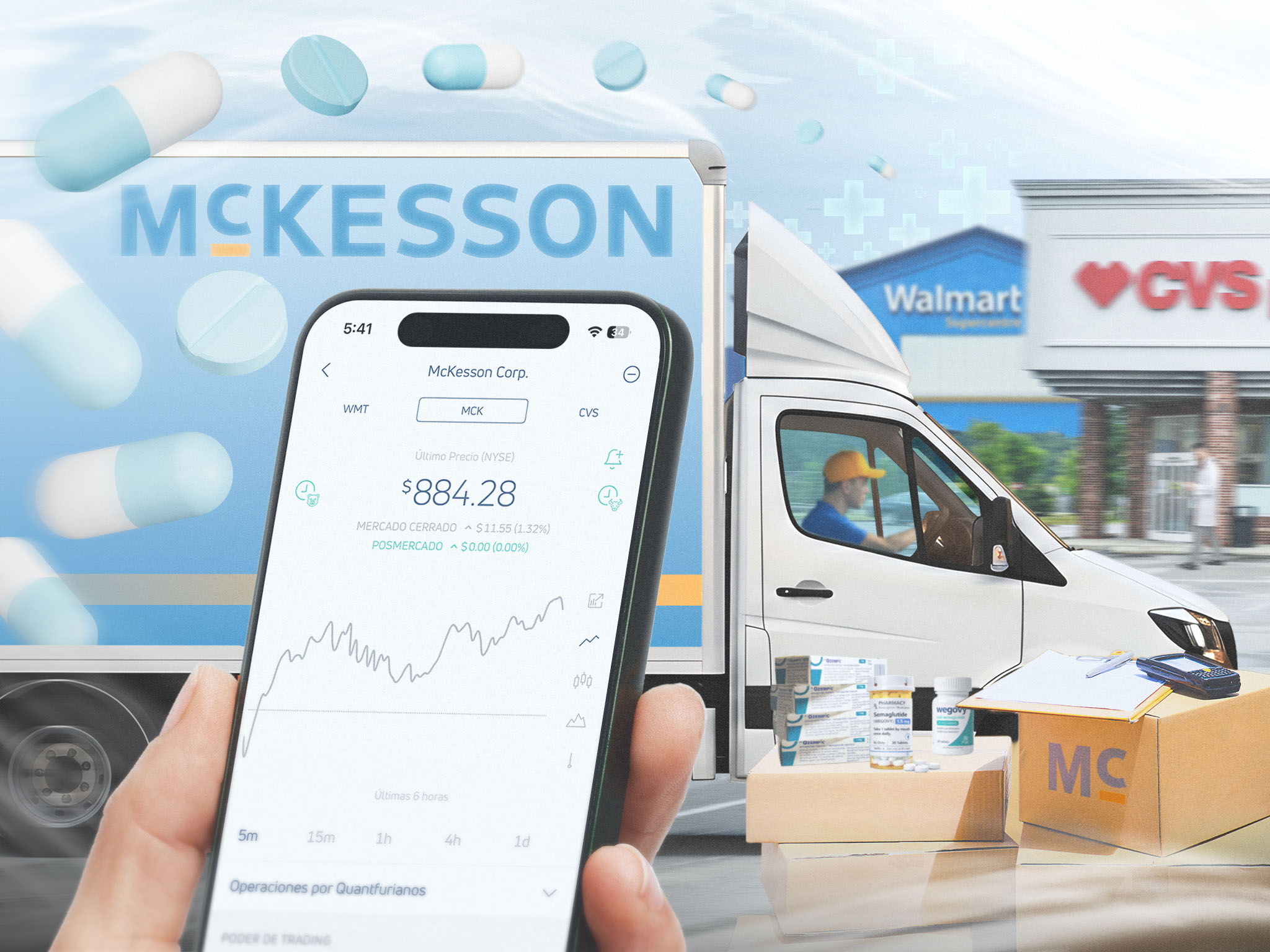


The number of patients taking specialty and weight loss drugs continues to rise due to better diagnostic tools, an aging population, and more pharmaceuticals being approved, driving growth for pharmaceutical wholesaler McKesson (NYSE: MCK).
As the largest drug distributor of medications in the U.S, patients depend on McKesson to deliver medications to their local pharmacies.
The company’s revenue rose by double digits throughout the first three quarters of fiscal 2026. McKesson’s stock has also risen steadily, increasing by 29.5% over the past year, including a 14% increase in the past six months as investors sought safe-haven assets.
Double-digit growth in sales
As the number of people taking routine medications for blood pressure, arthritis, and high cholesterol, specialty medicines to prevent cancer, and GLP-1s to treat diabetes and generate weight loss keeps increasing, wholesalers like McKesson will also boost their revenue.
“We expect the U.S. distribution space to continue to grow at a mid-single-digit pace over the next five years, fueled by the introduction of new pharmaceuticals, and increased usage of specialty medicines,” wrote Keonhee Kim, an equity analyst for Morningstar.
McKesson reported third-quarter revenue of $106.2 billion, rising by 11%, while earnings per diluted share of $9.59 increased by $2.64. The distributor produced $1.2 billion of cash flow from operations and $1.1 billion of free cash flow.
The company’s revenue grew because of increased prescription volumes from retailers and growth in the distribution of oncology and multispecialty products, which tend to have higher margins.
McKesson raised and narrowed its adjusted earnings per diluted share guidance range to $38.80 to $39.20 from the previous range of $38.35 to $38.85, which demonstrates growth of 17% to 19% compared to the prior year.
Investors have sought assets that are less risky due to the ongoing economic concerns related to the war in Iran and tariffs that have pushed prices higher, lowering some demand.
As one of the three major distributors of vital drugs, McKesson relies on its 43 robust distribution centers to supply medications to thousands of local and national pharmacies, including large pharmacies such as CVS Health (NYSE: CVS) and Walmart (NASDAQ: WMT). In fiscal 2025, revenue reached $359.1 billion, an increase of 16%.
“When you put it all together, it’s a company with really high market share, a really high-cost advantage, one that’s focused on the U.S. and a part of the economy that is less volatile,” said Brian Krawez, president at Scharf Investments, whose fund owns shares of McKesson, according to a Barron’s article.
Geopolitical issues also play a lesser role in McKesson’s business, which “should be far more insulated,” he added.
“You’re paying a below-market multiple for a lot more certainty and better growth,” Krawez added.
McKesson’s growth has led to a market cap of $106.8 billion, supplying “roughly a third of the domestic drug distribution market,” Kim wrote.
The distributor’s rivals are much smaller — Cardinal Health (NYSE: CAH) has a market cap of $49.89 billion, while Cencora, a much smaller competitor, has a market cap of $14.04 billion. These three companies provide medications to over 90% of the U.S. market, he added.
McKesson’s growth strategy includes adding to its specialty services platform and capabilities, CEO Brian Tyler said during an earnings call.
Last February, the company acquired an 80% controlling interest in Prism Vision, an ophthalmology and retina management services company, for $850 million.
McKesson’s value will continue to rise as the number of Americans aging increases and more people need to take essential medication to treat their ailments.


Comments