


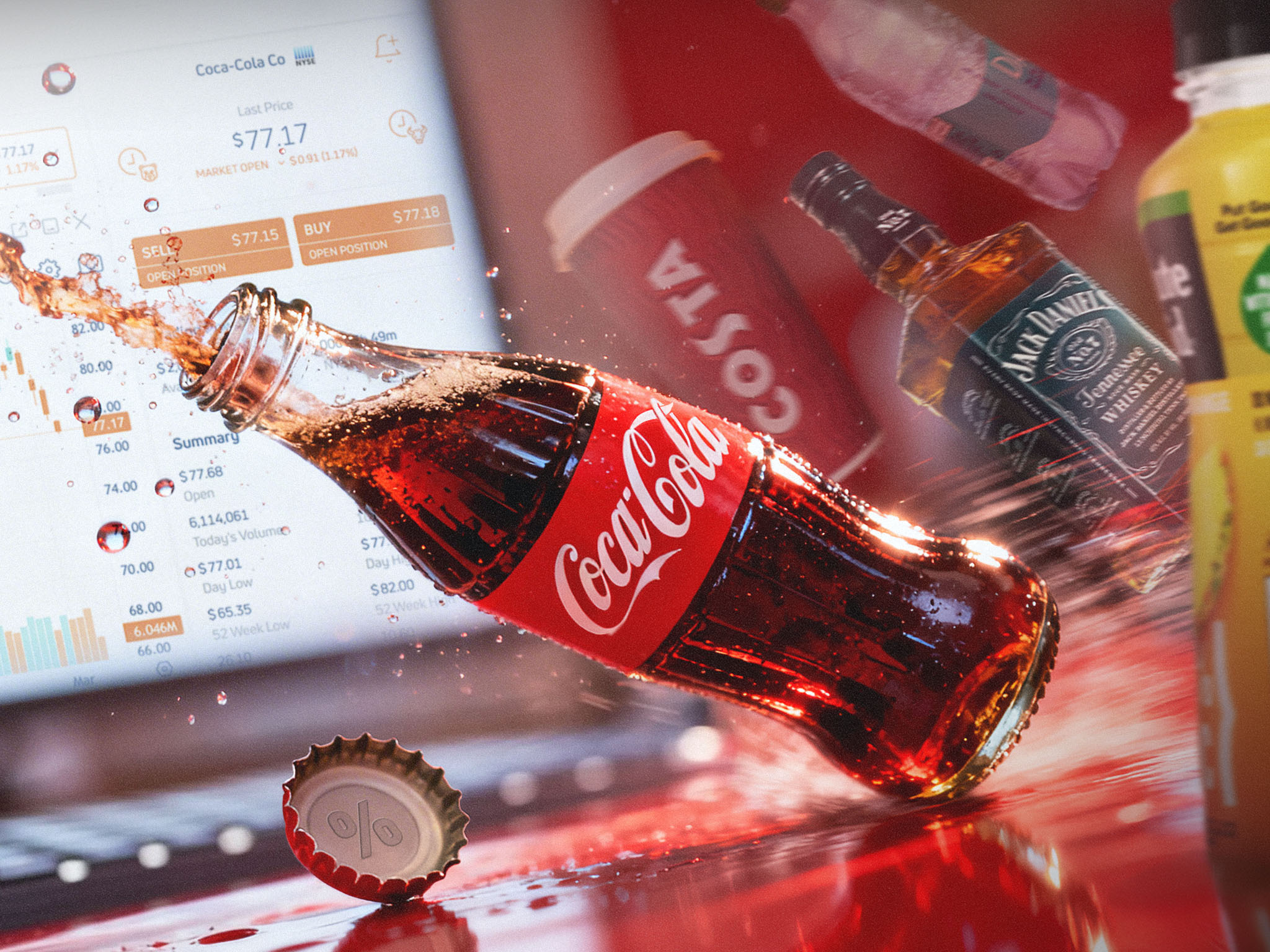


Coca-Cola (NYSE: KO) has gone through many advertising slogans in its 140 years as an American icon. Perhaps the most relevant one for its current state comes from 1969: “Coke, it’s the real thing.”
Its stock has been the real thing so far this year, soaring 13.3%, far above the S&P 500’s 0.3% gain.
“The stock has benefited from its dependable cash flows, global scale, and dividend appeal at a time when investors have been rotating toward lower-risk names,” Barron’s points out.
Operating cash flow totaled $7.4 billion in 2025, up 9% from 2024. Coke products are sold in more than 200 countries, and it has a 2.57% trailing dividend yield, compared to 1.15% for the S&P 500.
Coke’s bevy of brands
Coca-Cola has five groups of brands.
Sparkling soft drinks. This is the company’s core portfolio, including Coca-Cola, Sprite, Fanta, Schweppes, and Fresca. Coke has a big lead in the global market for carbonated soft drinks, with a volume share of 43% in 2024, 27 percentage points ahead of No.2 PepsiCo (NYSE: PEP), according to Euromonitor. This sector accounts for about 50% of Coke’s sales volume.
Hydration and sports. This includes Dasani water and Powerade sports drinks.
Juice, dairy and plant-based beverages. This includes Minute Maid juices and fairlife ultra-filtered milk.
Coffee and tea. This includes Costa Coffee and Gold Peak tea.
Ready-to-drink alcoholic beverages. That includes Jack Daniel’s (whiskey) & Coca-Cola and Topo Chico Hard Seltzer.
Coca-Cola’s business model includes selling its syrup and concentrates to mostly-independent bottlers, who then sell the beverages themselves. Of course, Coke also sells finished versions of its product in cans, bottles.
But the majority of its revenue, 58%, comes from selling the syrup and concentrates to its bottlers. Those sales generate gross profit margins of 60%-80%, compared to 30%-40% for finished products.
Last year, 41% of Coca-Cola’s revenue came from North America, 23% from Europe, the Mideast and Africa, 13% from Latin America, 11% from Asia Pacific and 12% from bottling investments.
History and future
Analysts are impressed with Coke’s history and enthusiastic about its future. “Coca-Cola has built a wide economic moat around its global beverage operations, based on strong intangible assets and a significant cost advantage,” wrote Morningstar analyst Dan Su.
“That will enable the company to deliver excess investment returns above its cost of capital beyond the next 20 years.” For the next 10 years, he forecast Coke’s return on invested capital will average 38%, easily surpassing its 7% cost of capital.
Many consumers have shown a reluctance to pay up for premium products in the past few years, but that hasn’t hurt Coke much so far.
Looking at its earnings, net revenue climbed 2% last year, to $47.9 billion. Organic revenue, which excludes currency and merger effects, rose 5%. The gains stemmed from 4% growth in price/mix and a 1% volume increase. Mix refers to the profit margins of products sold.
Adjusted operating profit appreciated 6.6%, the adjusted operating profit margin expanded 120 basis points to 31.2%, and adjusted earnings per share grew 4.2%.
Su liked the earnings numbers. “Coca-Cola managed to increase sales in line with its mid-single-digit long-term target, thanks to steadfast brand investments and its total beverage strategy,” she said. “We expect zero-sugar soda offerings and functional drinks to be priorities in the coming years.”
Coke predicts more good times ahead, with organic revenue ascending 4% to 5% this year, and adjusted earnings per share rising 7% to 8%. So perhaps “Coke is It,” as an ad from 1982 proclaimed.
The author owns shares of Coca-Cola


Comments