


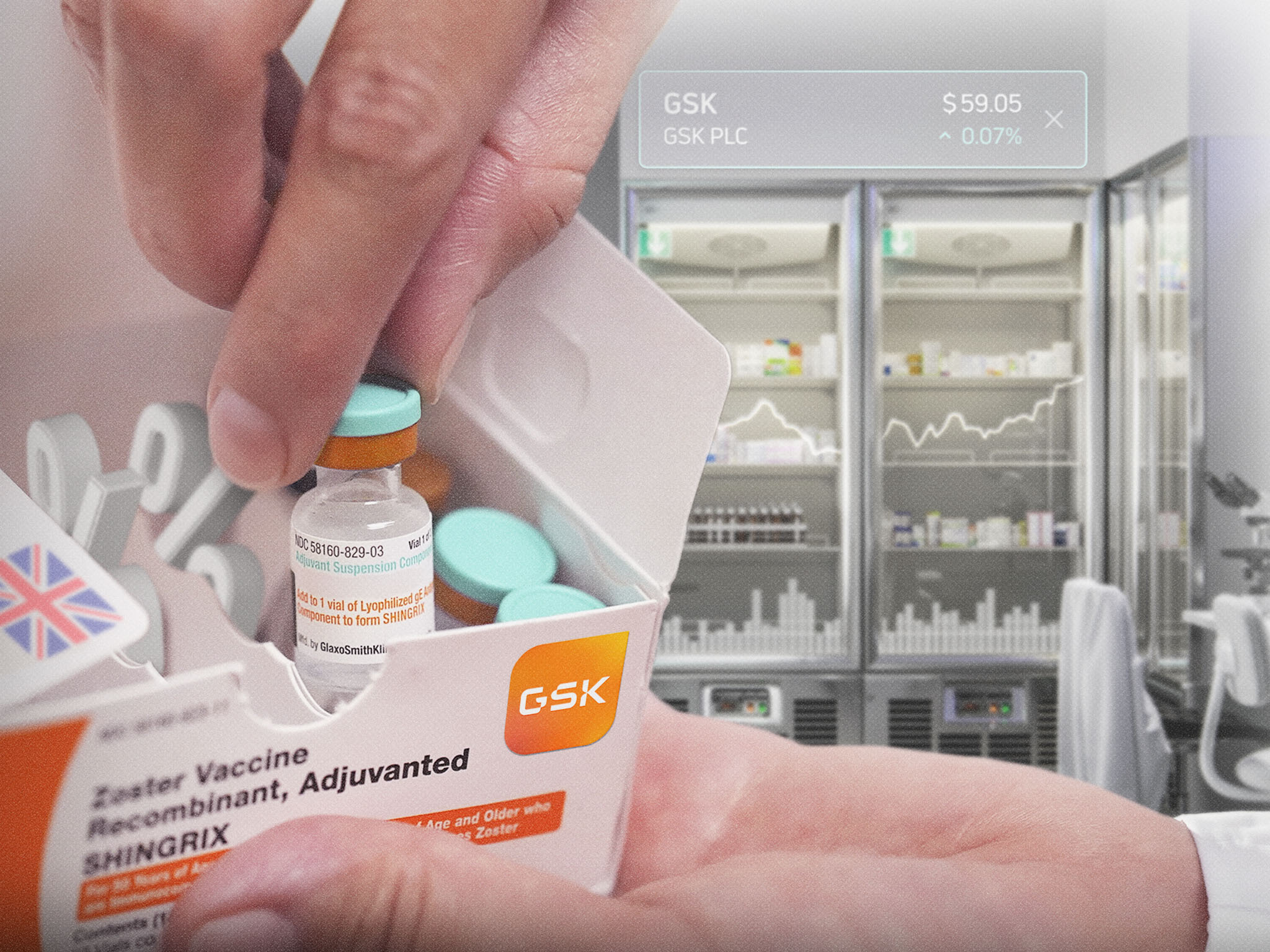


Pharmaceutical and vaccine company GSK (NYSE: GSK) is counting on its group of specialty medicines to continue to generate growth for the company.
The British company said it estimates revenue growth of 3% to 5% and core operating profit growth of 7% to 9% in 2026 due to the specialty medicines GSK manufactures to treat HIV, oncology, and inflammation. Revenue for 2025 totaled 32.67 billion pounds or $44.75 billion.
Shares of the company have risen by 65.8% during the past year.
The company reported that sales for the fourth quarter rose to 8.62 billion pounds compared with 8.12 billion pounds last year in the same period.
GSK reported growth that was double digits for its inflammation and immunology, oncology, and HIV portfolio. Revenue for its specialty medicines sales rose by 17%, while respiratory, immunology, and inflammation increased by 18%. Sales for oncology grew by 43,% and HIV revenue rose by 11%.
Sales for all of its vaccines increased by 2% while its Shingrix for shingles rose by 8%, its meningitis vaccines jumped by 12%, and Arexvy for respiratory disease increased by 2%.
New products leading growth
GSK continues to make investments for new drugs, and its “innovative new product lineup and expansive list of patent-protected drugs create a wide economic moat,” wrote Jay Lee, a senior equity analyst of healthcare for Morningstar.
“The magnitude of GSK’s reach is evidenced by a product portfolio that spans several therapeutic classes. The diverse platform insulates the company from problems with any single product,” he wrote.
“The pharmaceutical company has also developed next-generation drugs in the respiratory and HIV areas that should help mitigate both branded and generic competition,” he said. “We expect GSK to be a major competitor in respiratory, HIV, and vaccines over the next decade.”
Last September, the manufacturer said it plans to invest $30 billion during the next five years in the U.S. to run more clinical trials and work on research and development. Several major companies, including pharmaceutical ones, have made plans to build new plants to avoid paying tariffs.
GSK plans to shell out $1.2 billion to construct a biologic medicines facility in Pennsylvania, and its capital expenditure strategy includes upgrading its other existing facilities in Montana, Maryland, Pennsylvania, and North Carolina.
Part of GSK’s strategy is shifting its focus toward immunology and oncology “with genetic data to help develop the next generation of drugs,” said Lee.
“The benefits of these strategies are showing up in GSK’s pipeline and new drug launches,” he wrote.
“We expect this focus will improve approval rates and pricing power. In contrast to respiratory drugs, treatments for cancer indications carry much stronger pricing power with payers.”
More deals in the pipeline
Luke Miels, GSK’s new CEO, said the company plans to continue acquiring biopharmaceutical companies and is always scouting for new deals.
“The basic framework that we like for [business development] is in that 2-to-4 billion [dollar] range,” he said during GSK’s fourth quarter earnings call. “Typically, we like a program where the science is reasonably established.”
The company’s acquisition strategy includes drugs where “we’ve got a degree of validation on the science, but there are liabilities with the existing products,” Miels said.
GSK is searching for companies that are “well priced, not necessarily in the mainstream, hiding in plain sight,” he added. “And we’ll do that with a degree of frequency, which, again, will help us build out the late-stage portfolio.”
As GSK continues to add to its portfolio of drugs, expand in the U.S., and invest further into research and development, its pipeline of drugs will likely generate a healthy profit margin.


Comments