


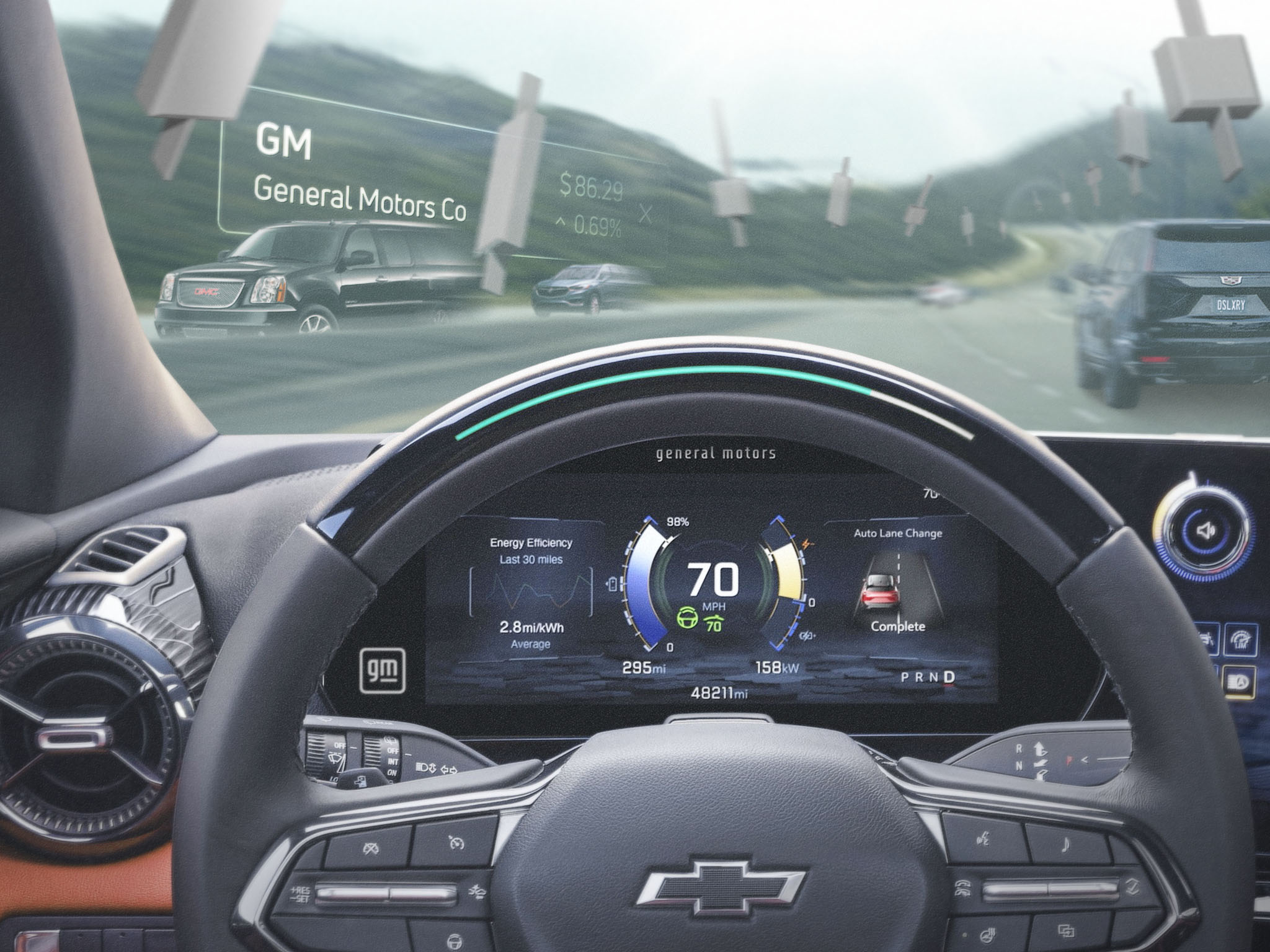


Just 16 years after needing a government bailout to avoid collapse, General Motors (NYSE: GM), the biggest U.S. automaker, is riding high.
Thanks to stringent cost controls and auto demand from high-income consumers, sales and profit are holding up better than analysts expected. That has sent GM’s stock soaring 82% over the past year, far above the gains for the S&P 500 index and the company’s two biggest competitors in the U.S.: Toyota (NYSE: TM) and Ford (NYSE: F).
GM has absorbed some punishing blows. Tariffs cost it $3.1 billion last year, though mitigation efforts, such as moving production to the U.S. pushed that impact down to $1.9 billion. And the issue isn’t going away. GM expects a gross tariff hit of $3 billion-$4 billion this year.
Limited auto purchases by lower- and middle-income consumers, many of whom can’t afford new cars, have hurt GM and other auto makers. A lot of these people have stagnant income, and auto prices have risen in recent years.
Declining purchases of electric vehicles also have struck GM and its brethren. The U.S. government has withdrawn support for the industry, eliminating the $7,500 EV purchase tax credit in September. GM posted $7.6 billion in EV-related charges in 2025.
Earnings decline
So it’s no wonder that the company’s revenue dipped 1.3% last year to $185 billion. Profit fell 55% to $2.7 billion, weighed down by the EV charges. But even amid those charges, GM’s EV sales jumped 48% last year. There are some drivers who still believe in electric.
Higher-priced internal-combustion-engine (mostly gasoline-powered) cars also were in high demand. Cadillac sales rose 8% last year, and the Buick Enclave SUV had its best sales in five years. Total internal-combustion engine vehicle sales gained 3% in 2025.
Then there are cost controls. Among the moves: GM has laid off workers – 4,500 to 5,000 in North America last year. It has cut spending on EVs and operations in China, where sales slumped. And it has reduced vehicle complexity by sharing components across different models.
Cost progress, share buybacks
GM’s costs have still risen in recent years, but the increase is decelerating. Costs climbed 11% in 2023, 7.5% in 2024 and 4.3% last year.
Share buybacks also have helped GM’s stock in recent years, with $23 billion of shares purchased since November 2023, reducing its outstanding share count by almost 35 percent. Last month, the company authorized another $6 billion of buybacks.
And it increased the stock dividend by 20%. GM predicted profit will ascend to $10.3 billion-$11.7 billion for all of 2026, 3.8 to 4.3 times the total for last year.
By all accounts GM has a brilliant CEO in Mary Barra, who has guided the company through many storms since taking the post in 2014. During her first year in office, GM issued 84 safety recalls for over 30 million cars. It’s been one thing after another since then, including an emphasis on EVs and now a de-emphasis.
But GM stands as one of the strongest auto companies in the world and looks set to drive as far as a quickly-shifting industry permits.


Comments