


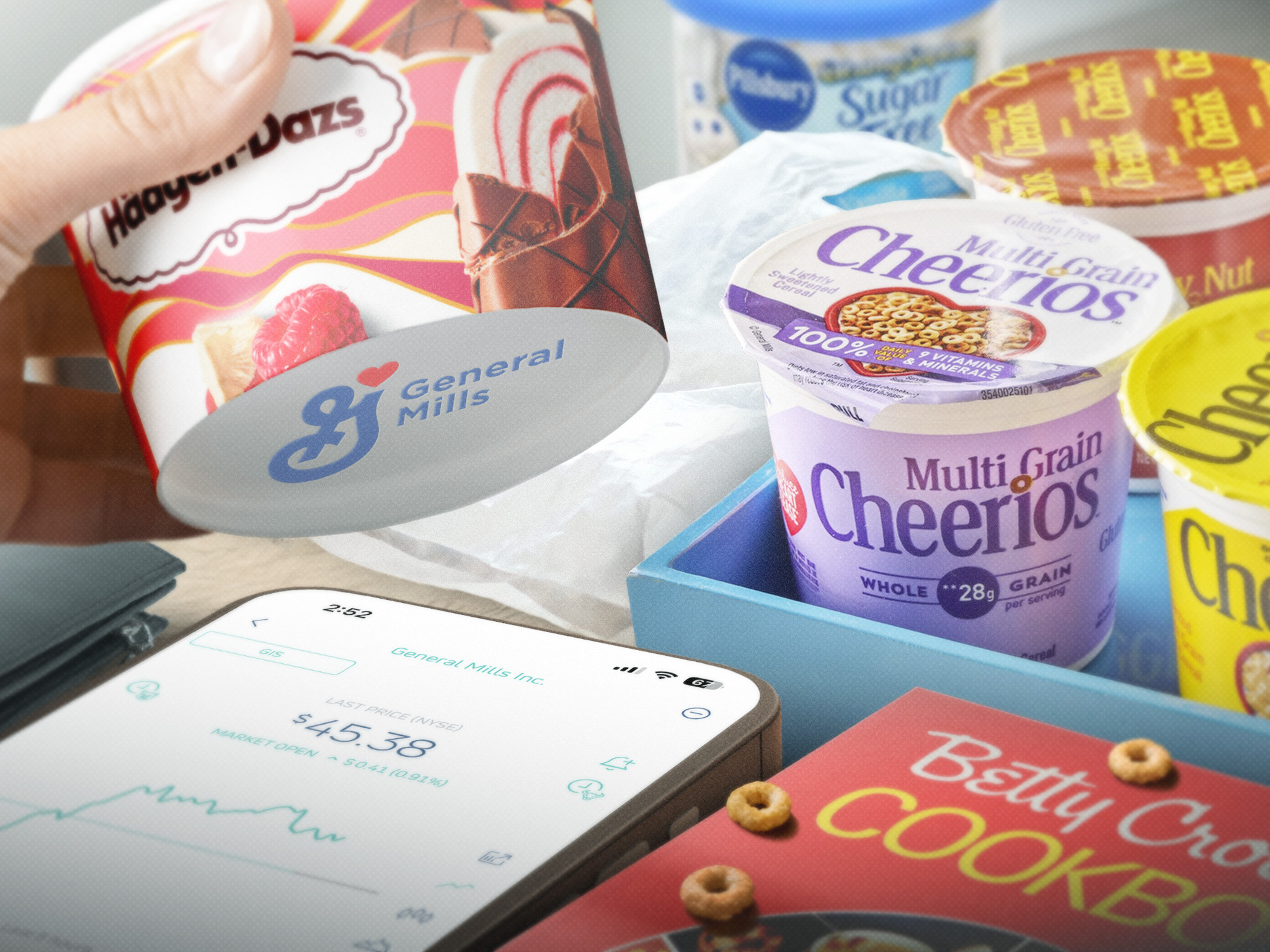


Packaged-food icon General Mills (NYSE: GIS) continues to struggle amid a difficult environment in its industry that includes low consumer confidence and stubborn inflation.
The company’s stock produced an annualized total return of negative 19.5% for the past year, negative 0.2% for the last five years and only positive 1.3% for 10 years.
The question now is when will 98-year-old General Mills recover?
Its most famous brands include Cheerios cereal, Pillsbury dough and frozen products, the Betty Crocker Cookbook of recipes and Haagen Dazs ice cream.
General Mills has leading brands on many grocery store shelves. It has the biggest share of the U.S. ready-to-eat cereal market, at 30% as of 2024, according to Euromonitor.
But that’s not a major coup, as that market has endured annual volume shrinkage of 2 percentage points in the decade through that year. The decline stems from consumers’ shift to protein from carbohydrates and falling dairy consumption, notes Morningstar analyst Kristoffer Inton.
Segment breakdown
General Mills’ biggest units are snacks, which account for 22% of revenue; cereal, which accounts for 16% of revenue; convenient meals, which account for 14%; pet food, which accounts for 13%; dough, which accounts for 12%; and baking mixes and ingredients, which account for 10%.
As for the company’s woes, the latest was a downward revision of its earnings outlook for fiscal 2026, ending May 31. It cut its organic net sales estimate to down 1.5%-2% from its prior forecast of down 1%-up 1%. And it sliced its projection for adjusted operating profit to down 16%-20% from its previous prediction of down 10%-15%.
General Mills CEO Jeff Harmening didn’t pull any punches in discussing the negative environment for the company’s businesses.
“Weak consumer sentiment, heightened uncertainty, and significant volatility have weighed on category growth and impacted consumer purchase patterns,” he said in a conference presentation Feb. 17. That has “resulted in a slower pace and higher cost of volume recovery than initially expected.”
The University of Michigan’s consumer sentiment index registered a preliminary 57.3 for February, down 11% from a year earlier. Consumer price inflation stood at 2.4% in January.
“The cumulative impact of inflation, [food stamp] benefit reductions, geopolitical uncertainty, and other factors have led to significant consumer stress, especially for the middle and lower-income groups,” Harmening said.
Customers want bargains
“We are seeing financially stressed consumers buying more of their products on promotion and less at everyday prices.”
But the CEO sees light at the end of the tunnel, and so does Morningstar’s Inton. “We expect General Mills’ portfolio of strong brands to maintain an intangible edge,” he said.
“The market worries that current challenges are structural and permanent. But given that most headwinds stem from the economic environment, they don’t alter our long-term outlook for the company.”
Inton forecasts low single-digit annual revenue growth and mid-teens growth for adjusted operating profit margins in coming years. Revenue fell 7% in the quarter ended Nov. 23 from a year earlier, and the adjusted operating margin was 17.4%.
He sees strong pet food sales ahead for General Mills, with its Blue Buffalo brand possessing No. 1 market share in the $42 billion U.S. dog food market and sixth place in the $18 billion U.S. cat food market.
So while things are tough for the company now, the future may look brighter.


Comments