


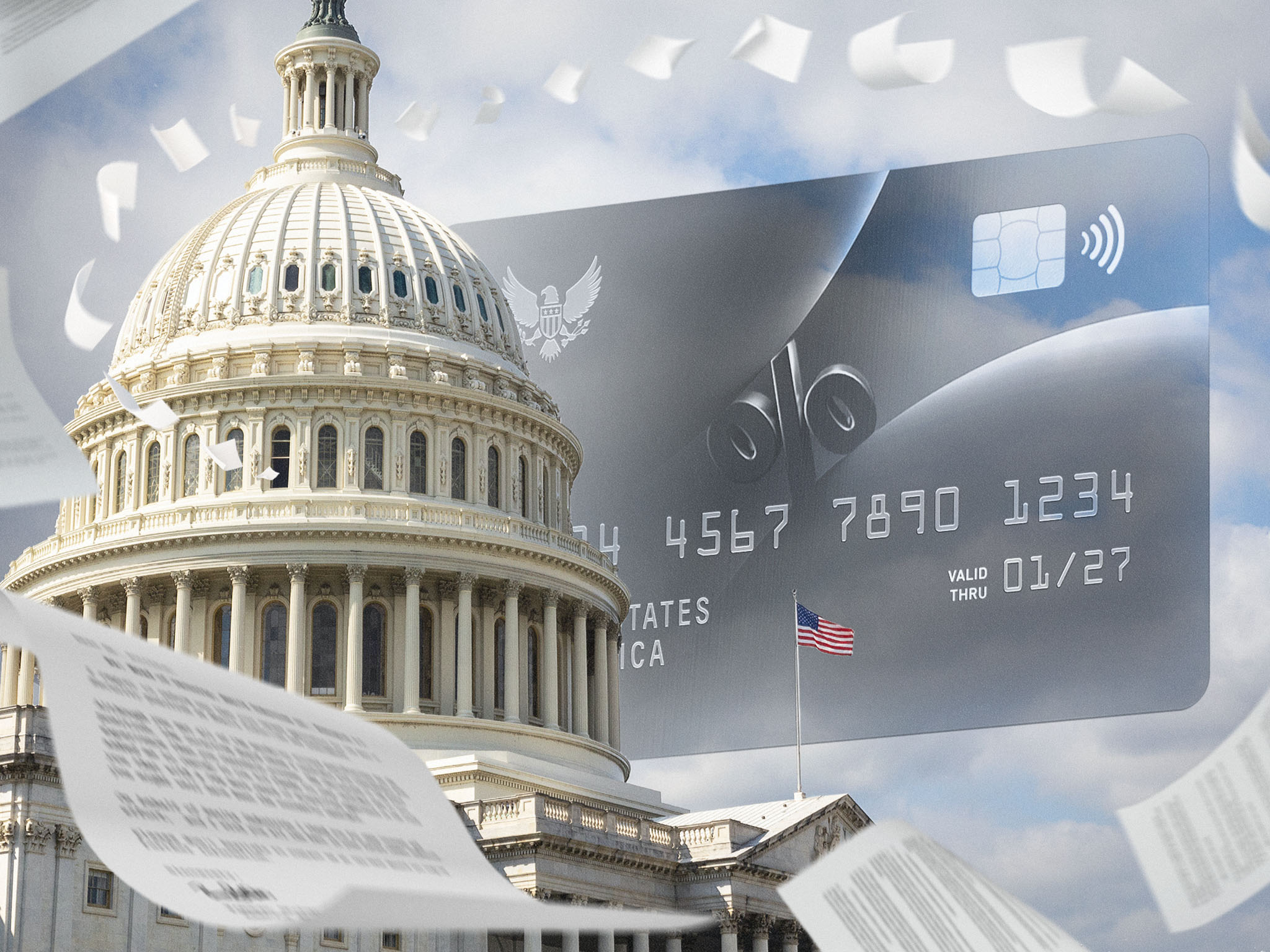


President Trump’s unprecedented proposal this month for a 10% cap for credit-card interest is unlikely to become reality.
By law, Congress must approve any such move, and not many legislators have expressed an interest. It’s also unclear how much conviction Trump has in his proposal for a one-year ban. He’s under pressure to show voters that he’s addressing their economic hardships. Yet even if the proposal never sees the light of day, he can say that he tried, but Congress wouldn’t cooperate.
The history of credit-card interest rates provides an interesting context for Trump’s move. The first widely-used card was issued by Diners Club in 1950. The full balance had to be paid each month to avoid a penalty fee. There were no interest-rate charges.
The first revolving credit card was the BankAmericard, (which later became Visa), issued in 1958. It allowed cardholders to carry a monthly balance rather than paying in full. They were charged an interest rate: the initial annual percentage rate was 18%.
Pre-1978 environment
Prior to 1978, state usury laws dictated credit card rates, capping them to prevent predatory lending. The caps generally ranged from 12%-18%.
By the mid-1970s, amid pressure from high inflation and recessions, most states converged to caps around 18%. But high money-market rates made lending unprofitable for banks in stricter states like New York, which capped credit-card rates at 12%.
The money-market rates mattered because that’s what banks paid on their own borrowings.
The rates often topped 20% in the 1970s due to double-digit inflation and recessions. This situation led to widespread defaults by consumers and limited credit access.
The Supreme Court changed everything in 1978, when it allowed national banks to export their home state’s higher (or uncapped) rates to customers nationwide. In response, states like South Dakota repealed usury laws entirely in 1980, attracting banks with promises of no rate ceilings.
Banks take advantage
Citibank relocated its credit card operations to Sioux Falls, South Dakota, in 1981 to escape New York’s 12% cap, followed by other major card issuers. Banks could thus charge whatever rate they chose around the country.
That regulatory regime has been in place ever since, accompanied by an explosive increase in the use of credit cards. About 80% of American adults use credit cards now, up from 15% in 1970. Average credit-card rates have ranged from 12% to 23% since 1994 and stood 22.3% in November. That high level stems from the Federal Reserve’s interest-rate hikes of 2022-23.
As for the possibility of caps now, there are some U.S. legislators who support the idea. A bill introduced in Congress last year to cap rates at 10% went nowhere. But part of the reason for that was Trump’s lack of support.
Still, House Speaker Mike Johnson has come out against Trump’s plan. And it’s hard to know how strongly the president will push it. Banks would certainly lobby hard against it. So 45 years of deregulation is unlikely to change soon.

Comments