




Nuclear energy is already powering millions of households and is no longer the last option considered for producing electricity, as consumers and industries demand higher levels.
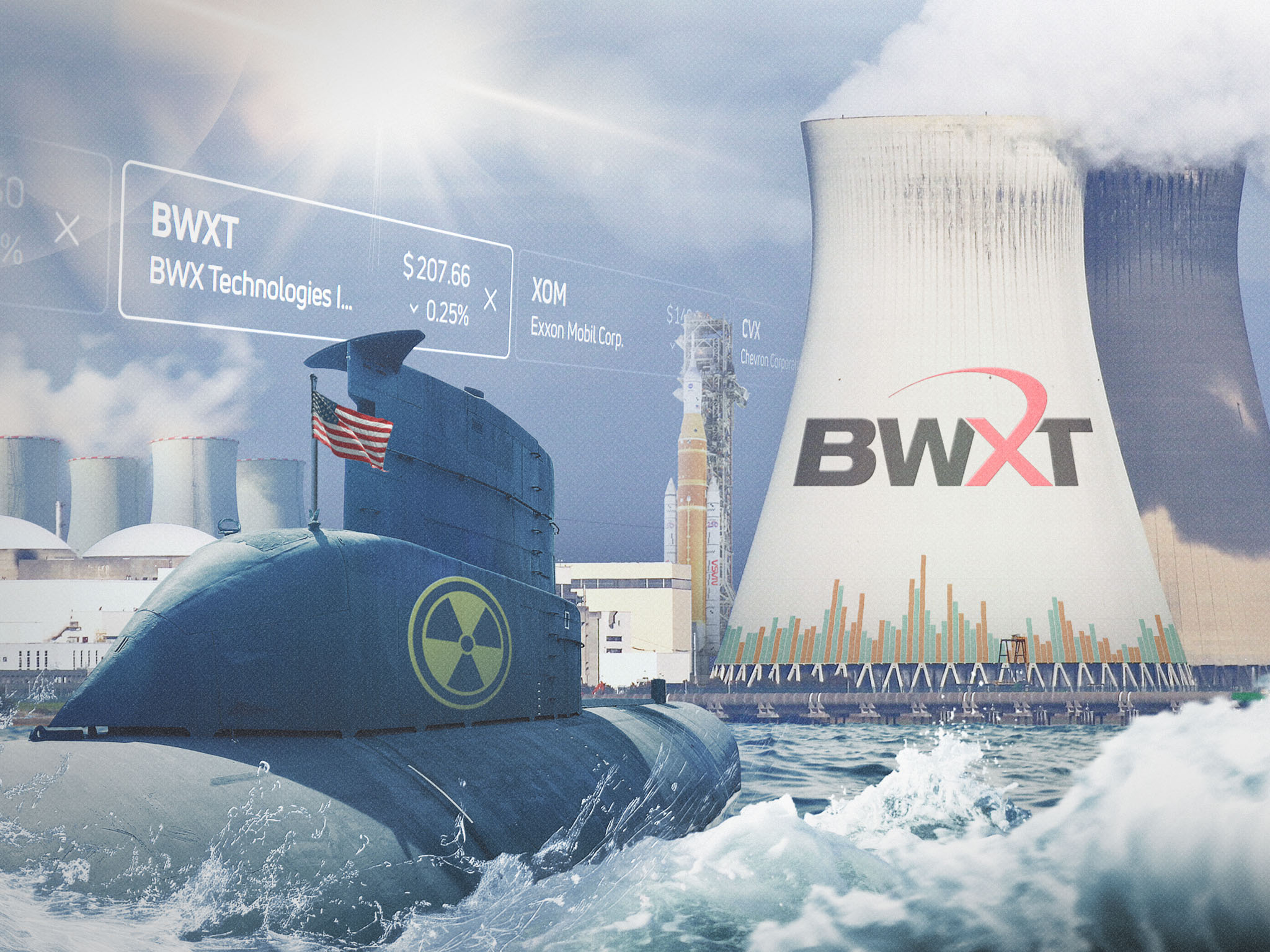
A supplier of nuclear technology to the military, NASA, and commercial utilities, BWX Technologies (NYSE: BWXT) reported its backlog of orders shot up by 50% in 2025.
Technological improvements have helped nuclear power gain traction as a viable alternative energy source, especially among the military and utilities that are BMX Technologies’ customers. Nuclear energy continues to grow and could play a larger part in a low-carbon solution as the global demand for energy has increased exponentially.
BWX Technologies serves as the main nuclear reactor supplier for the U.S. Navy, and the company also manufactures naval reactors and fuel for reactors, including the new TRISO nuclear fuel for the Project Pele microreactor, a 1.5-megawatt transportable power system which will be tested at the Idaho National Laboratory in 2027.
Nuclear energy has been touted as an option for cleaner and cheaper energy, especially as the continued rise of artificial intelligence means more and more data centers need to be built to make predictions, analyze data, and automate more tasks.
Investors are optimistic that the use of nuclear energy will continue to grow, which is reflected in the stock price of BWX Technologies that rose by 104% in the past year, surpassing oil and gas behemoths such as Exxon Mobil (NYSE: XOM) whose shares grew by 34% and Chevron (NYSE: CVX) at 17.4% during the same time period.
Rapid rise in growth
During the fourth quarter, BWX Technologies reported revenue grew by 9% year over year to $886 million on net income of $93.7 million.
The company is not counting on nuclear power to provide all the revenue, and its nuclear medical division, BWXT Medical, surpassed $100 million in annual revenue with 20% growth in 2025. The nuclear medicine division manufactures custom radiopharmaceuticals, radiotherapies, and medical isotopes that are used for diagnostic imaging and are given to patients to treat diseases such as cancer, which provide less damage to healthy cells.
The company reported 2025 was a stellar year with a backlog of $7.3 billion, up 50% year over year, on net income of $329.9 million due to large multi-year naval propulsion, special materials, and commercial nuclear power contract awards.
The contracts include the U.S. Naval Nuclear Propulsion Program contracts totaling $2.6 billion for manufacturing naval nuclear reactor components to support Virginia and Columbia-class submarines, as well as some work for certain Ford-class aircraft carrier components and a U.S. Naval Nuclear Propulsion Program contract totaling $174 million for the manufacture of naval nuclear reactor fuel.
Management believes that the company will continue to grow its operations, giving a strong outlook for 2026, estimating that revenue will reach $3.75 billion, compared to $3.2 billion in 2025.
“We sit at the intersection of national security in commercial nuclear power markets and a market leading position with unmatched scale, experiential qualifications, and regulatory credentials,” said CEO Rex Geveden in an earnings call with analysts.
BWX Technologies was formed in 2015 after Babcock & Wilcox was divided into two companies. The other half, Babcock & Wilcox Enterprises, focuses on commercial power generation.
Artificial intelligence added to operations
Similar to other companies, BWX Technologies is slowly adopting the use of artificial intelligence in its operations.
The company has already deployed machine learning to “improve certain internal functions, particularly manufacturing processes,” he said.
“We put hyperspectral sensors on complex weld processes and used a machine learning algorithm to figure out when those things were going out of spec, which saved us a ton of expensive rework,” Geveden said.
The nuclear equipment provider is still “figuring out ways” to use the re-release of large language models and will later use AI for factory automation, he said.
But investors and customers should not count on nuclear energy powering the data center infrastructure needed for the surge of AI adoption in the near term, Geveden added.
“I think there’s an outside story for AI with BWXT and there’s an inside story,” he said.
“I think you obviously know the outside story, which is, there’s an expectation that nuclear power will power the data centers of the future, and I think that’s a reasonable expectation, but that’s all in the windshield for us. Certainly, that’s not part of the current business mix.”
The use of nuclear energy is growing across the U.S, especially as companies are working to develop small modular reactors that could be less expensive and could one day replace the older mammoth-sized nuclear power plants.
Throughout the U.S., there are currently 94 nuclear reactors with 53 plants in 28 states that provide power to tens of millions of homes and businesses, according to the Nuclear Energy Institute.
BWX Technologies could see more growth as investors continue to pour capital into nuclear power in an effort to find reliable energy sources that are cheaper and emit lower emissions.


Comments