


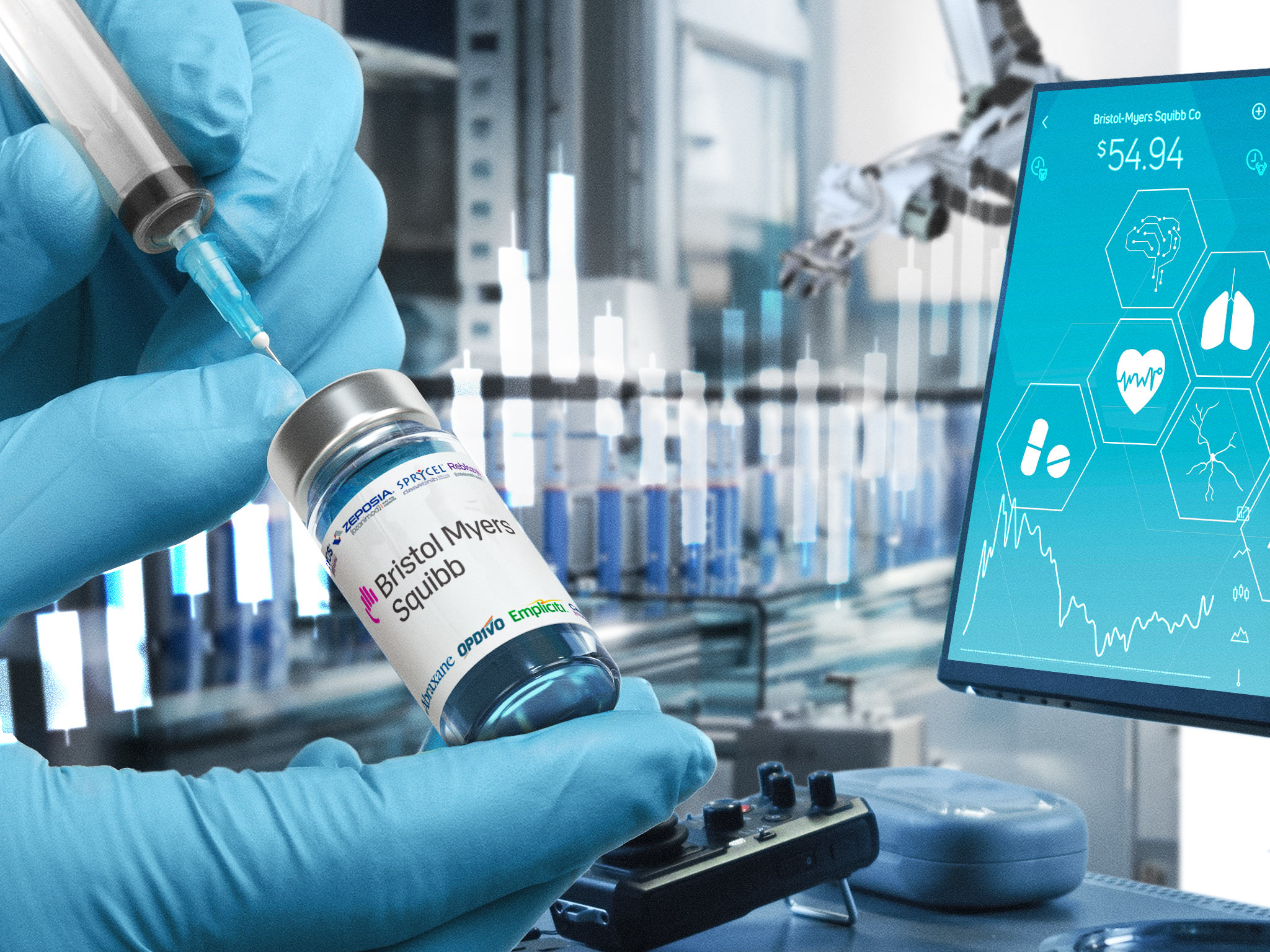


Bristol-Myers Squibb (NYSE: BMY) has built up a large pipeline of pharmaceutical drugs that treat diseases ranging from cardiology to immunology, but its growth products are the ones that make up the majority of its sales.
One of the larger companies in the pharmaceutical industry, with a $109 billion market capitalization, BMS owns a group of drugs that make up 57% of total sales, an 18% rise year over year.
These growth drugs produced $6.9 billion in revenue during the third quarter, compared to its slate of legacy drugs that reported a 12% drop in sales, generating $5.4 billion in revenue. Bristol’s Breyanzi is an oncology drug that produced over $1 billion in sales in 2025, along with a 60% revenue increase in the third quarter.
The stock rebounded within the past six months, rising by 15.6% as investors gained more confidence in the pharmaceutical company.
Mergers and acquisitions strategy adds growth
Since its $74 billion deal to acquire Celgene in 2019, Bristol purchased five more companies, including MyoKardia for $13.1 billion in 2020 and three deals alone in 2023 – Karuna Therapeutics for $14 billion, Mirati Therapeutics for $4.8 billion and RayzeBio for $3.6 billion. In 2025, the company purchased Orbital Therapeutics, which is developing a new generation of RNA medicines that reprogram the immune system for $1.5 billion. These deals broaden its drug offerings to treat autoimmune diseases, blood cancers, psoriasis, and lung cancer.
“Adept at partnerships and acquisitions, Bristol-Myers Squibb has built a strong portfolio of drugs and a robust pipeline,” wrote Karen Andersen, a director for Morningstar.
Bristol’s acquisition of Celgene generated an “excellent pipeline and a strong foothold in blood cancer,” while its more recent deals — “oncology firms Mirati and RayzeBio and neurology firm Karuna—also help support Bristol’s strong overall pipeline and wide moat,” she added.
Similar to its competitors, one risk factor that Bristol faces is the expiration of its patents on drugs, which means pharmaceutical companies must either find several blockbuster drugs that will generate billions of dollars in revenue or continue their acquisition strategy to find smaller drug companies that are targeting diseases that are impacting numerous patients.
Bristol does face some challenges, including its U.S. patent expiration for cancer drug Opdivo in 2028 and Merck’s (NYSE: MRK) “market-leading PD-1 Keytruda,” another drug that treats a variety of cancers, Andersen said.
“Bristol is aggressively repositioning itself to expand through challenging patent losses for drugs representing 47% of its 2024 sales, including cancer drugs Revlimid and Pomalyst by 2026, and cardiovascular drug Eliquis (marketed with Pfizer) in 2028,” she wrote.
One advantage that Bristol has is the recent approval of the subcutaneous version of Opdivo, since it will help mitigate some of the revenue dropoff, which gives the company more time for its other drugs to advance, she said. In addition, BioNTech-partnered pipeline program Pumitamig is currently in phase 3 testing “in certain forms of breast and lung cancers, and could be an early mover among new, bispecific immunotherapy drugs,” Andersen wrote.
The pharmaceutical giant also has two pipeline drugs, iberdomide and mezigdomide, that are in phase 3 trials, while Breyanzi, a blood cancer cell therapy drug, and Reblozyl, an anemia drug, are now in leading positions in the U.S. Its other recent acquisitions added cardiology drug Camyzos and schizophrenia drug Cobenfy to its pipeline, which are both estimated to produce multi-billion-dollar annual sales.
CEO Christopher Boerner had said he seeks to bring 10 new medicines to the market by 2030 and plans to “exit the decade as one of the sector’s fastest-growing companies.”
Bristol’s deal strategy has generated billions of dollars in revenue as additional drugs have been developed to treat more diseases. The diversity in the pipeline of drugs is likely to produce higher margins for many years.


Comments